
Have you been wondering where to celebrate Holi this Year or Are You Searching For An Ideal Place To Celebrate The Spirit of colors with some spirituality?
Then you should consider visiting Sangla For Your Holi Celebrations in 2026.
There are plenty of places around the country for Holi celebrations, starting from Mathura and Vrindavan, but the unique celebration of pahadi Holi in Sangla Valley will allow you to experience the authentic culture of Himachal.
Sangla Valley is a beautiful valley located in the Kinnaur district of Himachal Pradesh, located around 2700 meters above sea level & famous for its incredible scenery & apple orchards & typical Kinnauri villages.
Let’s have a look at Sangla Valley with an overview of the best time to visit for Holi celebrations, how to get there, and a few local experiences.
Sangla Holi 2026 Dates
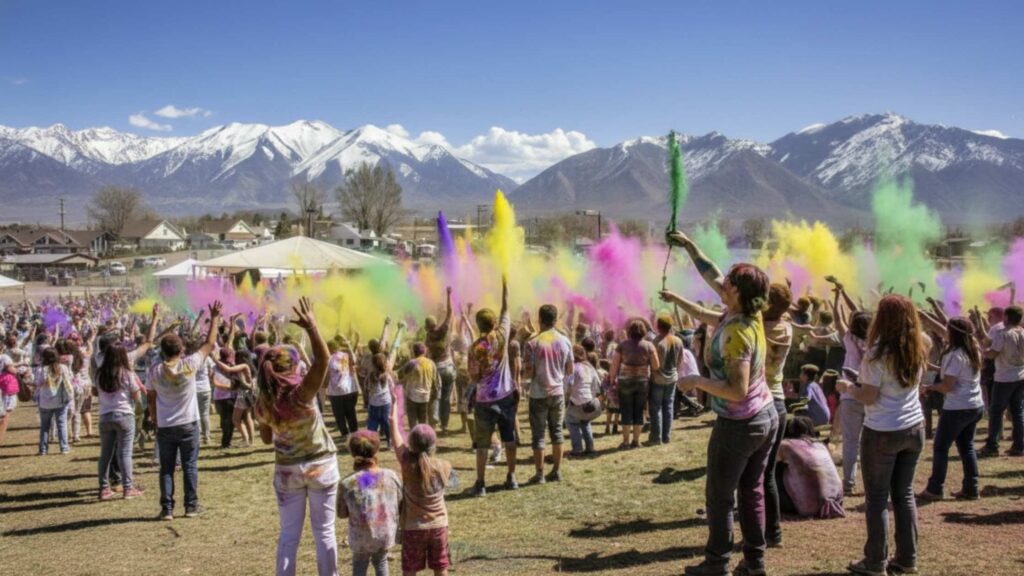
Dates for Sangla Holi
3 March – Day 1 of Holi
4 March – Day 2 of Holi
5 March – DAY 3 and final day of Holi
6 March – Faag Mela
The sangla holi celebration spans 4 days as part of the Faguli Festival, but Day 3 (March 4-5) is the main day of the festival. Don’t miss it.
What Makes Faguli Festival in Sangla So Damn Unique?
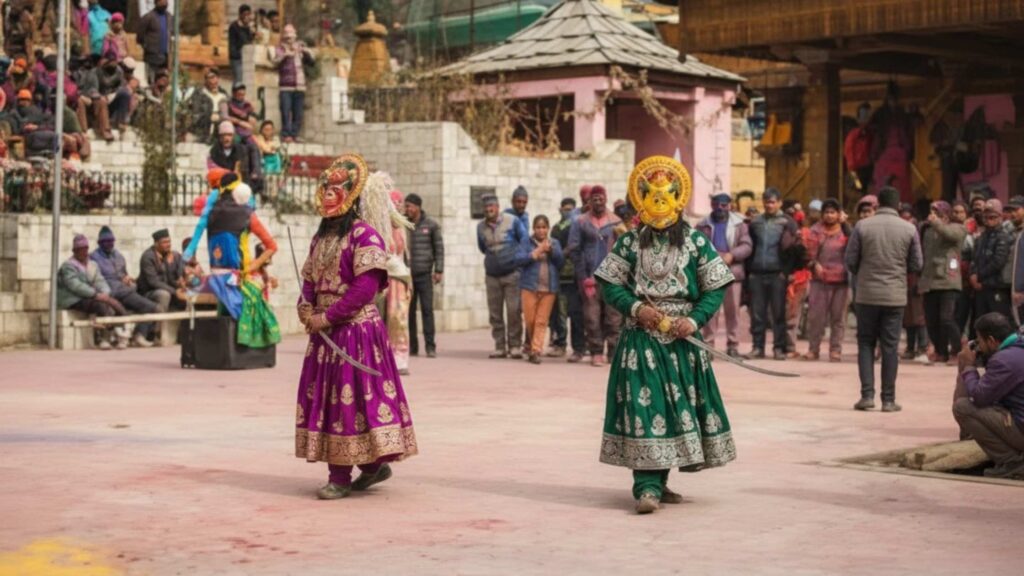
Holi is an annual event celebrated by people from all over India. The Kinnaur Valley people celebrate Holi as part of the Faguli Festival. This four-day festival takes place in Sangla, with the third day being dedicated to Holi.
History:
Sangla Holi is not just the celebration of colors, but also has great cultural significance. This festival is also known as “Fagli” or “Phaguli”, and has been passed down to the people of the valley by their ancestors.
The festival has been celebrated in the valley for over 800 years, making it one of the oldest festivals in India. Its deeply influenced by the Hindu and Buddhist cultures that make up the majority of the valley.
Also referred to as the “ festival of masks”, the festival is celebrated over 4 days where villagers enact characters from Ramayana and other Hindu epics along with local folklore. It’s a grand celebration over 4 days.
Sangla Holi Rituals:
Festivities begin many weeks before the actual celebration date, with a lot of preparation in different parts of the valley.
Day 1:
The first day starts with preparing “TOTU” which is offered to the people as prasad. It is made of buttermilk and roasted barley flour. Elders visit Nag Temple and perform opening ceremonies.
Day 2:
Locals start to gather at the sacred sites in the valley. The purpose is to offer prayers and perform puja for the local deities and spirits. A procession starts with local traditional instruments, including dhol, karnal, and shehnai.
Day 3:
On the day of Holi, all of Sangla Valley becomes lively as villagers come together to celebrate. In the morning, all villagers gather at the Nag Temple, which is the main temple for the village of Sangla, where they perform rituals to gain fortune and happiness in life.
Phagli Dance is a traditional performance during the Holi celebration in Sangla Valley. It displays the close relationship between humans and nature. This dance is performed by men and women, who share their intricate footwork and graceful movement patterns.
The dance embodies the Kinnauri people’s aspiration to live harmoniously with Mother Earth.
Day 4:
On the last day, some ome of the men dress as the characters of the Ramayana and parade through the village, accompanied by traditional drums and folk music.
The inhabitants of Kinnaur Valley honour the Faguli Festival by lighting candles or diyas, just like during Diwali.
Holi marks the transition of winter into spring and summer for the inhabitants of Kinnaur Valley. The parade will offer traditional foods and phasur alcohol to the people.
During this festival, local food is provided along with a traditional drink named phasur. But the highlight of Holi Sangla is that it brings out a unique blend of two of India’s biggest holidays, Diwali and Holi. This makes it an exceptional event to witness in Sangla.
Going to this festival provides participants with an authentic experience of the diversity of India.
During Holi, the atmosphere in Sangla resembles that of a major celebration. Festivities go on for three to four days, with vibrant hues replacing what had previously been a barren landscape during the winter months.
How To Reach Sangla?
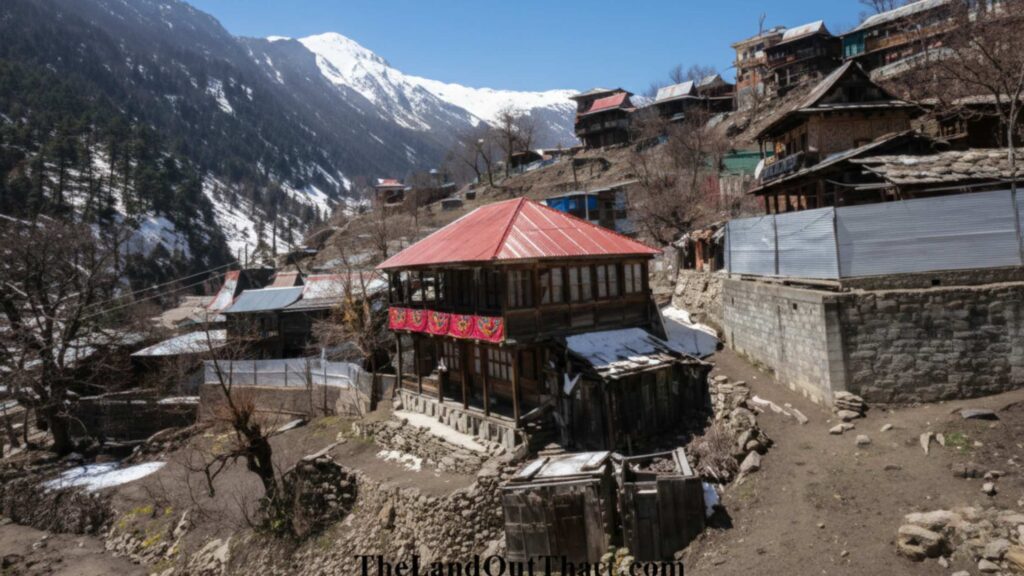
You can travel to Sangla by plane, train, or bus:
Traveling by Air – Bhuntar Airport, which is close to Kullu, is the nearest airport to Sangla, you can take a taxi or take a bus from Bhuntar to Sangla Valley. The taxi and bus services will take you through Kullu and Manali on a scenic road.
Traveling by Train – You can take a train from Delhi to Kalka (approximately 6 hours) and then transfer to the Shimla Toy Train, which takes about 5 hours. After getting to Shimla, you can take a bus or hire a cab to Sangla.
Traveling by Road – Regular buses leave Shimla for Sangla around 7 AM, and the trip will take roughly 12 hours. You will travel through picturesque towns, including Narkanda and Rampur. You can travel to Shimla and Sangla from Delhi or Chandigarh by car or bus. The total time for a journey from Delhi will be around 16 hours by road.
Ideal Arrival Time: March 2, 2026
Reach Sangla by March 2.
Why this works:
- You’ll catch the early preparations
- Buffer day in case of road delays (Himalayan weather can surprise you)
- Time to settle in, find accommodations, meet locals, and understand the vibe
- You’re present for the full 4-day Faguli experience
Where to stay: Book homestays or guesthouses in Sangla Village itself. Hotels in Reckong Peo (20 km away) are backup options if Sangla is booked.
Main Festival Zones
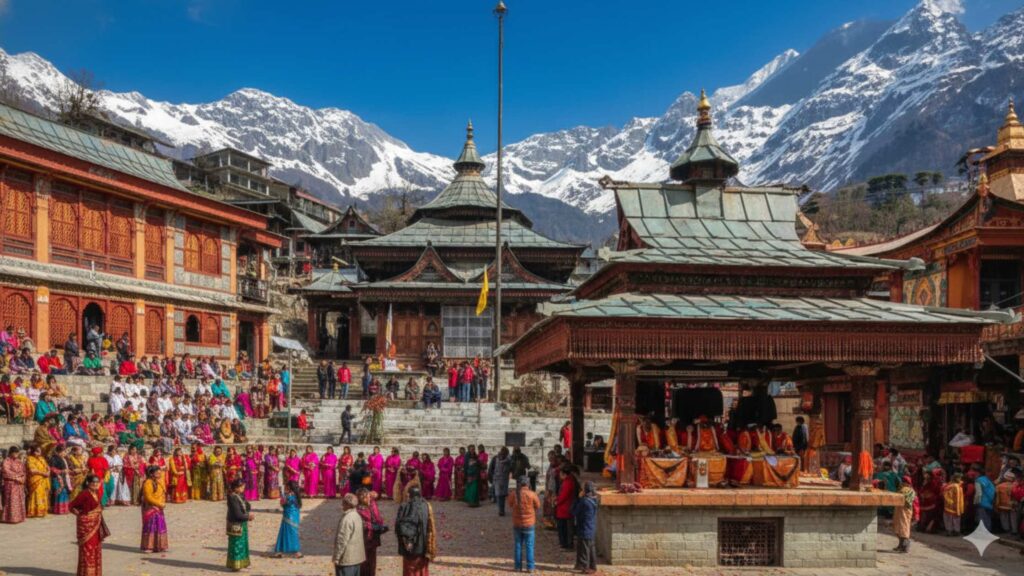
Sangla Chowk (Main Square): Ground zero for color play on March 4-5. Locals and travelers gather here dressed in white, ready to get covered in gulaal and snow. Expect dhol music, laughter, and organized chaos.
Nag Temple Complex: The spiritual heart. Opening prayers happen here. Holika Dahan bonfire. Deity worship. Respect the sanctity — no loud behavior or shoes inside temple premises.
Village Streets: Ramayana processions wind through narrow lanes. Fagli dancers perform in open areas. Diyas light up wooden homes. Just wander and soak it in.
Do’s and Don’ts: Respect the Culture
DO:
- Wear old white clothes (they will get stained beyond repair)
- Ask permission before applying color to locals — this isn’t Goa; it’s a community festival
- Accept Totu prasad and Phasur wine if offered (it’s hospitality, not obligation)
- Photograph respectfully — ask first, especially during temple rituals
- Use organic, eco-friendly gulaal only to protect the Baspa River ecosystem
- Join the Fagli dance if invited — they love when travelers participate
- Cover your head if entering temples (especially important for women at Bering Nag Temple)
DON’T:
- Blast loud music or treat this like a rave (this is sacred, not a party venue)
- Apply color forcefully or touch people without consent
- Litter — Sangla is pristine; keep it that way
- Get drunk and disrespectful (Phasur is communal, not a license to misbehave)
- Wander into restricted temple areas or click photos where signage prohibits it
- Miss the sunrise over Kinnaur Kailash (trust us on this)
Your Perfect Itinerary Aligned to Faguli Schedule
5-Day Sangla Holi Itinerary
This Sangla Holi itinerary has plenty of breathing room and realistic travel times. No hurried sightseeing. No back-to-back exhausting drives. Exploration and relaxation are perfectly balanced.
Day 1: Overnight Travel from Delhi/Chandigarh to Shimla
Assemble in Delhi by evening and board the overnight Volvo towards Shimla. The trip begins while the city sleeps, and the mountains quietly take over by morning.
Overnight: Volvo
Highlight: Overnight comfort travel to start fresh in Himachal
Day 2: Shimla to Kalpa
Arrive in Shimla and continue into Kinnaur. This drive is the slow build-up to the first “wow” moment of the trip—Kalpa’s air, silence, and the scale of the mountains.
If weather is clear, your evening is for Kinner Kailash views—the kind that makes you sit still for a while.
Overnight: Kalpa
Highlight: Kinner Kailash sunset viewpoint (weather permitting)
Day 3: Kalpa to Sangla
A shorter drive today, but packed with scenery—river bends, pine lines, and Baspa Valley’s calm. Sangla feels like a different Himachal: quieter, more rooted, more local.
You’ll ease into the valley’s festival energy—this is where the “Holi trip” starts turning into a community experience.
Overnight: Sangla
Highlight: Baspa Valley entry + local-first mountain stay
Day 4: Chitkul + Holika Dahan
Today is a picture-postcard day. You head to Chitkul, often called the Last Village on this route, for views, walks, and that rare border-valley atmosphere.
By evening, come back to Sangla for Holika Dahan—a bonfire night that feels more intimate in a Himalayan valley than anywhere else.
Overnight: Sangla
Highlight: Chitkul day trip + Holika Dahan night
Day 5: Main Sangla Holi Day
This is the day you came for. Sangla’s Holi is known for being culture-forward—the kind of celebration that isn’t staged for tourists.
Expect a traditional, local-led festive atmosphere. Depending on village schedule, this is when you may witness signature elements like the Faguli/Fagli mask dance and other cultural performances.
Overnight: Sangla
Highlight: Authentic Sangla Holi with locals (festival-led experience)
Day 6: Sangla ➝ Shimla ➝ Delhi (Overnight Volvo)
After breakfast, you begin the return. Reach Shimla by evening and board your overnight Volvo back to Delhi.
Overnight: Volvo
Highlight: Scenic wrap-up drive + smooth overnight return
Day 7: Arrival in Delhi/Chandigarh (Early Morning)
You arrive in Delhi in the morning with colour in your camera, stories in your head, and a very different kind of Holi memory.
Drop: Delhi
Package vs Self-Plan

Option 1: Book a Tour Package
Best for: First-timers, families, groups who want everything handled.
What’s included: Transport (Delhi/Chandigarh to Sangla and back), accommodations (homestays or hotels), meals, local guide, permits.
Average cost: ₹12,000 – ₹15,000 per person for 4-5 days (triple sharing). Higher for double occupancy.
Pros:
✔ No planning stress
✔ Local guides explain cultural context
✔ Group energy enhances the experience
Cons:
✘ Less flexibility
✘ Fixed itinerary (can’t linger if you fall in love with a spot)
Where to book: Himalayan Dream Treks, JustWravel, Bhatakna, WDRLUST, HIMTREK, Wanderers Nest.
Option 2: Self-Plan (DIY Route)
Best for: Solo travelers, couples, experienced Himalayan explorers who want freedom.
What you handle: Book HRTC buses or hire private taxi. Find homestays on Airbnb or via local contacts. Meals at dhabas or homestay kitchens.
Average cost: ₹5,000 – ₹8,000 per person (budget mode, sharing transport).
Pros:
✔ Complete control over schedule
✔ Cheaper if you’re budget-conscious
✔ More immersive (you’ll interact directly with locals)
Cons:
✘ Requires research and planning
✘ Risk of accommodation not being available during festival rush
Pro tip: If DIY, book accommodations by early February. Sangla fills up fast during Holi week.
Frequently Asked Questions
When is Sangla Holi in 2026?
The holi in sangla date is March 4-5, 2026 (Main Day), as part of the 4-day Faguli Festival running from March 3-6, 2026.
Is Sangla Holi celebrated on the same day as national Holi?
Not exactly. National Holi (Holika Dahan and Rangwali Holi) falls on March 3-4, 2026. The Sangla faguli festival 2026 begins on March 3 but the main color celebrations happen on March 4-5, slightly overlapping but distinct due to the 4-day structure.
How many days is the Faguli festival?
The faguli festival schedule spans 4 days, with each day having specific rituals: Day 1 (Totu distribution), Day 2 (processions), Day 3 (main Holi), Day 4 (diya lighting).
What should tourists keep in mind during local celebrations?
- Respect temple sanctity (remove shoes, cover heads)
- Use organic colors only to protect the environment
- Ask before applying color or photographing
- Accept offerings graciously but never force participation
- Dress modestly (this isn’t Goa)
- Don’t litter or blast loud music
When should we reach Sangla to not miss the main day?
Ideal arrival: March 2, 2026. This gives you buffer time, lets you experience the full 4-day Faguli flow, and ensures you’re settled before the main color day on March 4-5.
Is it crowded during Holi week?
It is, but Sangla is nowhere near as crowded as Mathura, Vrindavan, or Delhi.
Final Word: Confirm Exact Village-Level Schedule Locally
Important Disclaimer:
In Sangla, the date for Sangla Holi in 2026 follows the phases of the Moon, and the times as listed above come from reliable and confirmed sources. However, the days and times for specific ritualistic activities, community celebrations, and events may vary based on community decisions (local village councils), type of weather, and astrological considerations.
To verify your arrival day in Sangla and to confirm? Ask:
- Your host at your homestay.
- A priest working at the Nag Temple.
- Elders of your village.
- Local guides.
Confirm the exact times* for any processions, bonfire rituals, or main color plays with the sources listed above.
This is the beauty of living traditions. Traditions that have grown and developed around a community rather than a printed schedule.
Ready to Align Your Trip with the Festival Flow?
Send Your Dates → We’ll Align Your Itinerary with Festival Flow
Planning a trip to Sangla but not sure how to sync it with the Faguli schedule? Want local homestay recommendations? Need transport sorted from Delhi or Chandigarh?
Let Manali Tour Planner design your perfect Sangla Holi 2026 experience — complete with handpicked stays, festival-aligned itinerary, local guides, and insider access to the celebrations most tourists miss.
📞 Call or WhatsApp: +91 70185 37498
Tell us your dates. We’ll make sure you don’t just visit Sangla — you experience it.
Also read: Sangla Holi Tour Package (2026): 5-Day Itinerary, Inclusions, Price + How to Book