
Are you preparing for Shoja in February? It is important to have realistic expectations and be flexible with your planning.
The following guide will assist you in being prepared for this adventure
So, coming to the most asked question, “Should you visit Shoja in February?”
The answer is yes – but only if you are also interested in enjoying snow-covered walks, cozy accommodations, and flexible scheduling.
Here is a list of things you could potentially experience while visiting Shoja in February:
• Enjoy the beauty of snow-covered forests as you walk through them, close to where you will be staying.
• View the sunrise rising over the Dhauladhar Ridge and turn pink from several locations throughout the village
• Relax by the Bukhari (wood-burning heater) with a cup of hot tea every night.
But some things are not guaranteed:
• Access to the Jalori Pass is completely weather-dependent, and because of this, it is often closed or only open for short periods during the winter. Therefore, do not make this a major part of your travel itinerary.
• Depending on the amount of snow received overnight, the road between Jibhi and Shoja may change drastically in a matter of hours.
The visitors who enjoy Shoja in February are those seeking a retreat from the hustle and bustle of everyday life. If you are looking for a serene getaway, read ahead.
February Weather in Shoja vs Jibhi vs Tirthan (What to Expect)
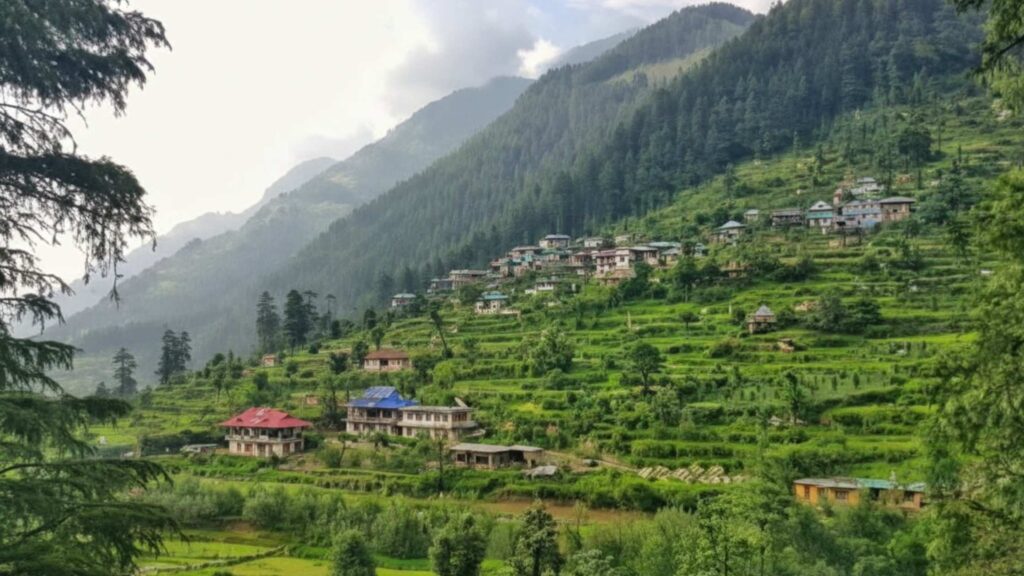
In February, it gets chilly in all three locations, but Shoja feels colder because it is higher, about 2,500 meters. The actual feel differs from Tirthan to Jibhi to Shoja, even though the temperature may not be all that different.
February Shoja:
- 2°C to 8°C during the day (warmer in sunny areas)
- Nighttime: -2 to -5 degrees Celsius (sometimes lower after new snowfall)
- Depending on recent storms, the village’s snow cover is typically between one and three feet.
- Around 7:15 AM, sunrise arrives at the Shoja temple; if you’re awake, go outside. It’s unbelievable how light appears on fresh snow.
Jibhi In February
- Jibhi is marginally warmer than Shoja due to its lower altitude.
- Snowfall occurs, but it melts more quickly during the day. Nights continue to drop below zero, particularly in the second and third weeks. Unless there is a lot of snow overnight, the waterfall trail is usually accessible.
February in the Tirthan Valley:
- Visits to the riverside are softer than those to Shoja
- More mist and less snow
- Better for those who prefer the feel of winter without a lot of snow
I had a bad experience with weather apps – they just don’t work well here. So please, please, please… do not rely on them completely.
The best forecast for your upcoming trip will come from your accommodation host the night before or from your driver the morning of your travel date. They can advise you about snow conditions at Jalori or whether there are slippery roads after 3 pm en route to Shoja.
You may also encounter road closures. It’s not common every February, but when there is heavy snowfall for 2-3 days, the ability to travel between villages decreases greatly.
However, this shouldn’t prevent you from making your trip. If you are on a tight schedule, plan for buffer days
Road Status Reality
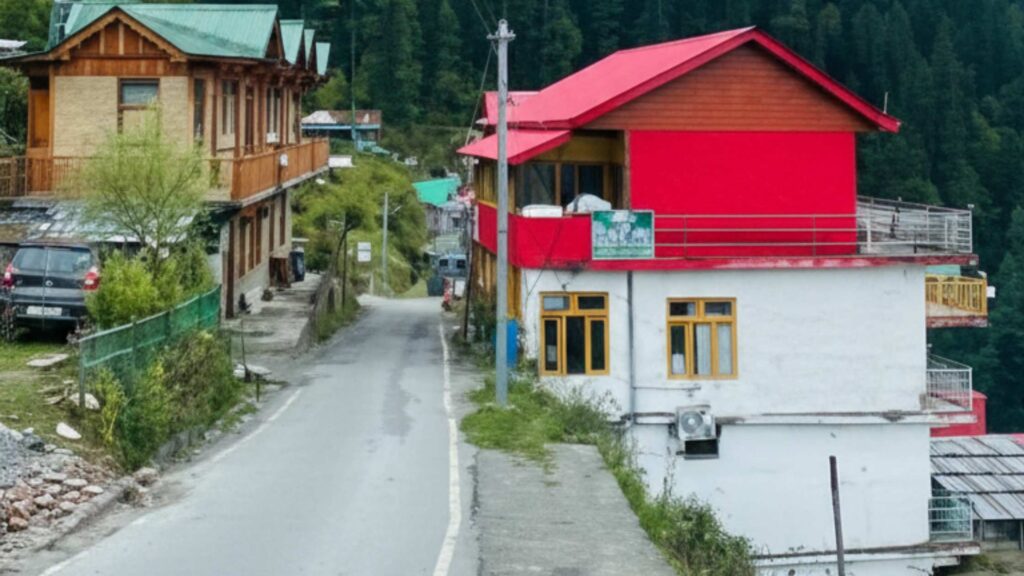
This is the most important part of planning Shoja in February, and it’s where most blogs sugarcoat things.
The best way to navigate the area is to be flexible and stay informed about changes to the road status. This means you want to know right away when a road will be closed/opened.
Jalori Pass in February: Usually Closed or Partially Open
Jalori Pass (3,120 metres) stays closed through most of January and February due to snow accumulation. Most years, BRO will reopen it temporarily (for approximately 2-4 days) around the middle to late part of the month—but this is not guaranteed.
The main road from Shoja to Jalori top is blocked 2–5 km before the pass. You can sometimes walk part of the way if the snow isn’t too deep. But remember that local taxis don’t attempt the full route in peak winter
How to Check Road Status Properly
Put Google out of your mind. In the mountains, you literally have to forget about Google. The likelihood of Google getting you into trouble is very high.
Here’s how to find out for sure:
- Give the owner of your accommodation a call 24 hours prior to your arrival. They are aware of the current state of affairs between the Shoja and the Aut Tunnel.
- Ask Jibhi’s local drivers. Drivers congregate at the taxi stand next to Jibhi Market (right after the bridge), and they will inform you if the Shoja road has snowed overnight.
- Instead of a week in advance, check the day before. In February, things change quickly.
I was informed by a driver that “if clouds sit heavy on the ridge above Shoja after 2 PM, expect fresh snow by evening.” You can’t get that kind of insight from an app.
Best Snowfall Experiences in February
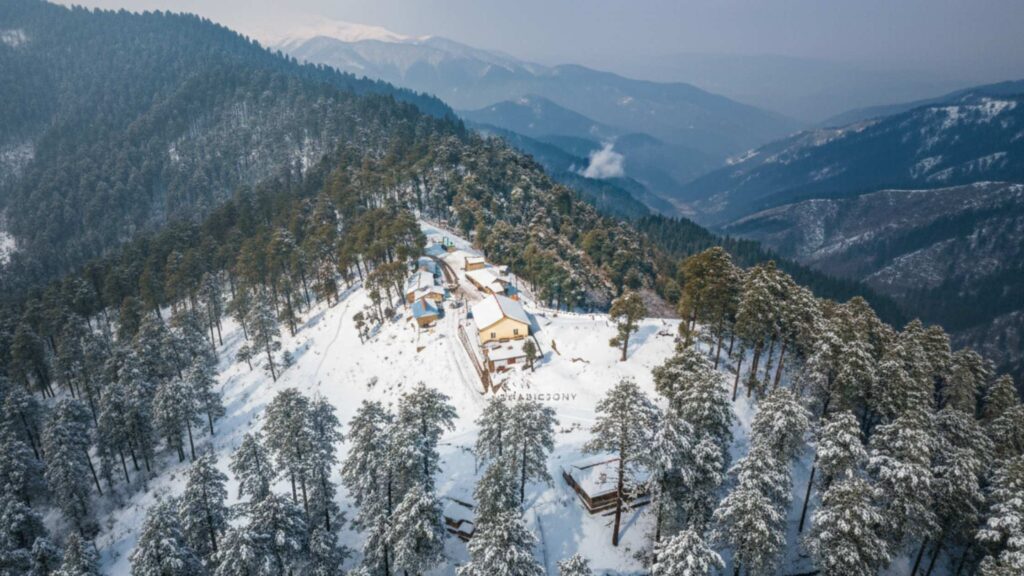
To have an unforgettable Shoja trip, you don’t have to go to Jalori Pass. I assure you of this! Within 500 meters of the homestay I was staying at, some of my favorite moments took place.
Shoja Snow Forest Walks
The majority of homestays are located near pine and oak forests. These paths become peaceful, unspoiled passageways following new snowfall. You can easily take a snowy forest walk if you’re looking for some peaceful, romantic moments.
Additionally, this could be a fantastic substitute for your checklist if you have nowhere to go.
The Shoja temple walk (15–20 minutes uphill from the village centre):
- Best done between 7–9 AM when the snow is still crisp
- The temple courtyard gives you a 180° view of the valley
- If it snows overnight, you’ll be the first one making footprints
The ridge trail behind most stays (10–15 minutes):
- Locals use this path to reach their orchards
- Snow sits heavier here because sunlight comes late
- Carry trekking poles if you have them—the slope gets slippery after 3 PM when ice forms
Sunrise Viewpoint Moments
Shoja’s most beautiful painting is not a sunset, but a sunrise.
The best spot to see the sunrise is the open area near the Shoja Temple. Arrive by 7 AM at the latest. You’ll see the Dhauladhar Range change from pink to orange to a glowing white. The entire sequence happens within 10 minutes or less and you can enjoy it without having to filter the colours through a camera lens.
For example, I was actually planning on sleeping in one February morning, but by chance I was at the homestay in the morning, when my host banged on my door and said, “You should come and see this!” And I did.
This was such an incredible sight that it has remained etched into my memory forever!
Such experiences are not ephemeral; they reside permanently in your mind, and make a home for similar memories.
If Jalori Opens (Rare Windows): Quick Photo Stop & Return
If you’re lucky enough to catch an open window:
- Start early (8–9 AM)
- Plan for a 2–3 hour round trip max
- Don’t commit to a full-day Jalori trek—just go up, take in the view, return before afternoon ice forms
- Local taxis charge ₹1,200–₹1,800 for a Shoja–Jalori–Shoja trip (shared between passengers)
But honestly? Some of my most peaceful February moments happened because Jalori was closed. However, there’s no hard and fix rule that this should be done and that shouldn’t. No pressure. No “must-do” list. Carpe Diem!!
3-Day Itinerary: Jibhi–Shoja–Tirthan from Chandigarh/Delhi

This is the itinerary I recommend most often. It balances travel time, flexibility, and realistic winter plans.
Day 1: Chandigarh/Delhi → Jibhi (Waterfall + Café Evening)
Route:
- From Chandigarh: 5–6 hours via Mandi–Aut Tunnel (260 km)
- From Delhi: 10–11 hours; start by 7 AM to reach before dark (520 km)
Stops worth taking:
- Sundernagar Lake (15-minute photo break; the viewpoint on the right side before the bridge is better than the main parking area)
- Pandoh Dam view (quick stop; skip if running late)
Reach Jibhi by 2–3 PM. After checking into your hotel, stop for lunch and then walk to Jibhi Waterfall on a trail that may have snow in February—bring sturdy boots instead of sneakers. For dinner, stop at one of the cafés close to the bridge. The café with the wooden deck has a view of the river. If available, order fresh local trout.
Day 2: Jibhi → Shoja (Snow Stays + Short Walks)
Morning in Jibhi: Sleep in or do a quick walk to Mini Thailand if you’re up early. The pool area looks surreal when mist sits low.
Drive to Shoja (30–40 minutes from Jibhi):
- The road climbs steadily after Ghiyagi
- Snow patches start appearing around 5 km before Shoja
- If your taxi driver says, “road is okay but we’ll take it slow,” trust the pace
Afternoon/evening in Shoja:
- Discover the village (it’s small; you can see most of it in 20 minutes).
- Spend the evening conversing or reading in the Bukhari.
- If you’re wondering about Jalori’s status, ask your stay owner.
- A short stroll to the temple of Shoja
Pro tip: Dinner is served early (7:30–8:30 PM). Don’t miss it. Typically, the food is simple, regional, and far better than you might anticipate.
Day 3: Shoja/Tirthan Riverside Chill → Return
A fun way to explore/Shoja (snow) is just to step out of your front door if it’s snowed overnight. Just walk around slowly, breathe the cold air, and enjoy the peaceful surroundings.
Option A (if starting back early): You may want to leave Shoja by 10 AM, grab some lunch in Jibhi as you make your way back to Chandigarh and you should arrive before 5 PM
Option B (if you have time): Drive down to Tirthan Valley (Nagini or Gushaini). Spend 2–3 hours by the river before heading back. It is very peaceful at the riversides during February, and the river’s clear blue-green colour looks nothing short of stunning!
Where to Stay in February
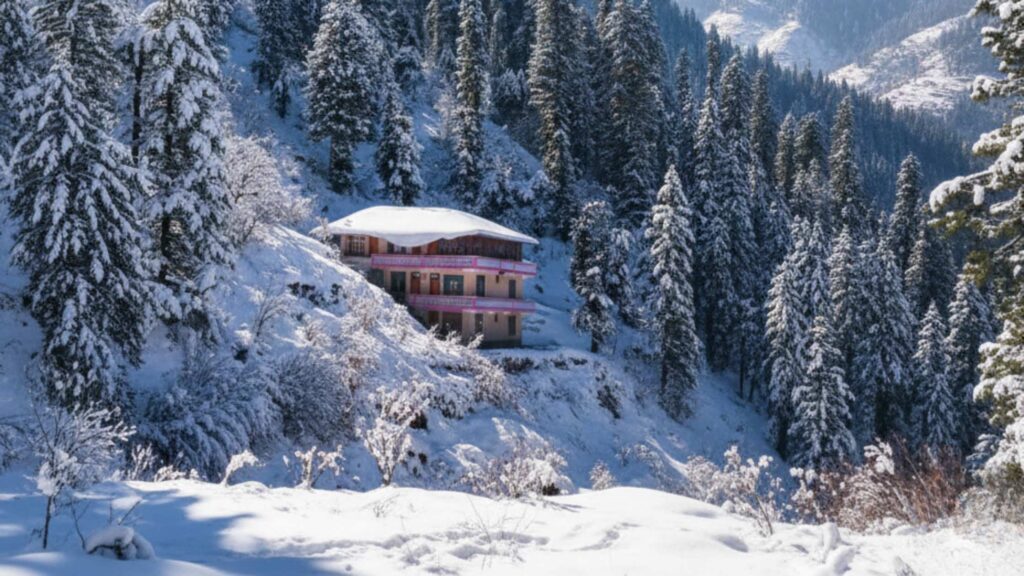
Not all stays are equal in February. Here’s what separates good winter stays from uncomfortable ones.
Heater Situation (Critical)
Most Shoja homestays use bukharis (wood heaters). They’re traditional, effective, and create a cosy vibe. But here’s what to confirm:
- Is the bukhari in the common area or your room?
- Do they provide extra blankets? (You’ll need 2–3 at night)
- Is there hot water 24/7 or only at fixed times?
Some newer stays have electric heaters, but power cuts happen. Ask about backup power—even a small inverter makes a difference when electricity goes out at 9 PM.
Approach Road + Parking
In February, the last 200–500 metres to some homestays can get tricky after snowfall. If you’re self-driving, ask:
- Can my car reach the property, or do I need to walk the last stretch?
- Is parking cleared after snow?
This matters more than you think. Carrying luggage uphill through snow in the dark isn’t fun.
Best for Couples vs Groups
For couples looking for quiet:
- Book stays slightly outside the main village cluster
- Look for places with private balconies or individual cottages
- Budget: ₹2,500–₹4,500/night (includes meals)
For groups (4–6 people):
- Larger homestays with common sitting areas work better
- Shared bukhari space becomes the evening hangout spot
- Budget: ₹1,800–₹3,000/person (full board)
One couple I met stayed in a tiny cottage 10 minutes uphill from Shoja centre. No WiFi, no phone signal. They said it was the best decision they made. “We came to disconnect—this forced us to actually do it.”
What to Pack for Shoja in February
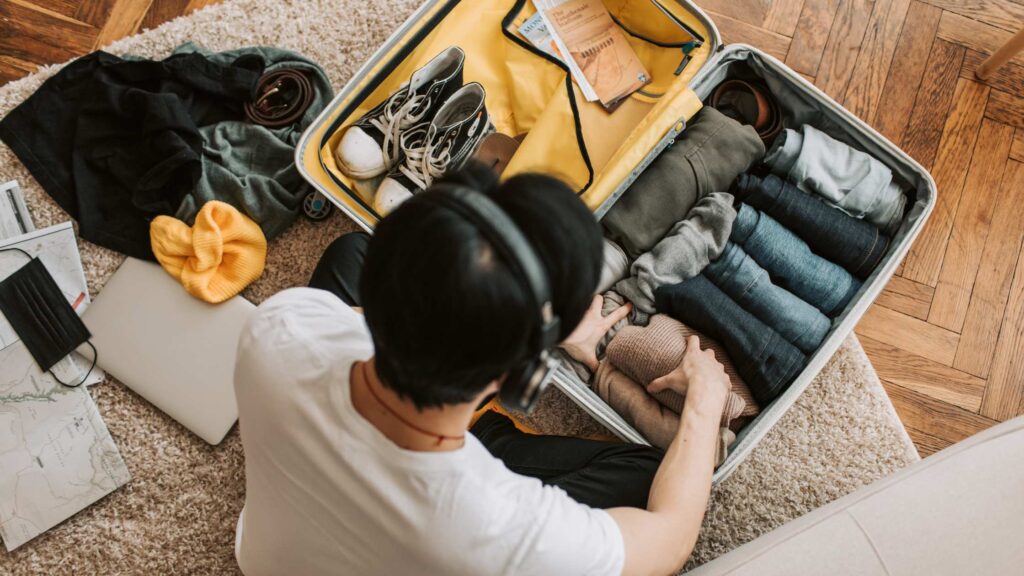
I’ve made every packing mistake possible. Here’s what actually matters.
Essentials (Non-Negotiable)
Snow boots or trekking shoes with grip:
- Sneakers = guaranteed slipping
- Boots with ankle support are ideal
- If you don’t have proper boots, buy cheap crampons (ice grips) at Aut or Bhuntar for ₹200–₹300
Gloves (2 pairs):
- One pair will get wet during snow play or walks
- Carry a second pair for evenings
Thermal layers:
- 2 thermal tops + 1 thermal bottom
- Layering is better than one heavy jacket
Lip balm + sunglasses:
- Cold wind cracks lips fast
- Snow glare is real, even on cloudy days
Moisturiser/cold cream:
- Your skin will thank you
Nice to Have
- Trekking poles (helps on icy slopes)
- Power bank (electricity can be unpredictable)
- Small torch/headlamp (for early morning or evening walks)
- Thermos (for carrying hot tea on walks)
Don’t Bring
Jeans as your primary layer: They get cold and take forever to dry if they get wet.
Fancy shoes: You’ll ruin them.
Too many clothes: You’ll wear the same 2–3 outfits. Pack light, layer smart.
I met someone who packed 4 pairs of jeans for a 3-day trip. By Day 2, they were borrowing thermal pants from their homestay owner.
Cost & Booking: How to Plan from Delhi/Chandigarh

Cab vs Self-Drive in Snow
Cab from Delhi to Shoja:
- Cost: ₹10,000–₹14,000 (round trip, Innova or similar)
- Safer in February because drivers know the route
- You can relax, sleep, enjoy the views
Cab from Chandigarh to Shoja:
- Cost: ₹6,000–₹9,000 (round trip)
- Shorter distance = easier drive
Self-drive:
- Possible if you have winter driving experience
- Snow tyres or chains aren’t mandatory but help
- The stretch after Aut Tunnel can get icy post-afternoon
- Keep a local driver’s number saved in case you need help
Jibhi to Shoja taxi cost: ₹800–₹1,200 (one-way, can be shared)
Most travellers book a round-trip cab from Chandigarh/Delhi that stays with them for 2–3 days. Easier, safer, and honestly not much more expensive than piecing together local taxis.
Let Us Help You Plan
Share your travel dates & departure city (Delhi/Chandigarh), and we’ll suggest:
- The safest route based on current road conditions
- Stay options that match your budget and comfort needs
- A cab quote (with backup driver contacts)
We’ve sent 100+ travellers to Shoja in winter. We know which stays have the warmest bukharis, which drivers take the inside lane carefully, and what to do if Jalori doesn’t open.
DM us or drop a comment with your dates. Let’s plan this properly.
FAQs:
Is there snowfall in Shoja in February?
Yes, Shoja typically has snow cover through most of February, with fresh snowfall possible anytime during the month. Accumulation ranges from 1–3 feet depending on recent storms, and nights stay below freezing.
Is Jibhi good in February for snow?
Jibhi gets snowfall in February, but it melts faster due to its altitude. You’ll likely only see snow patches around the village.
Is Jalori Pass open in February?
Jalori Pass is usually closed in February due to heavy snow. The BRO clears it for brief windows (2–4 days), but this is without any fixed schedule.
What are the best things to do in Shoja in winter?
The best experiences are snow forest walks, sunrise views, and cosy evenings.
Which is better in Feb: Jibhi or Shoja or Tirthan?
Shoja if you want deeper snow and higher altitude quiet. Jibhi if you prefer easier access and café culture. Tirthan if you want riverside chill with milder weather.
What to pack for Shoja in February?
Pack snow boots (or trekking shoes with grip), 2 pairs of gloves, thermal layers, lip balm, sunglasses, and moisturiser.
How to reach Shoja from Delhi/Chandigarh in winter?
From Chandigarh: 5–6 hours via Mandi–Aut Tunnel (₹6,000–₹9,000 round-trip cab). From Delhi: 10–11 hours (₹10,000–₹14,000 round-trip cab).
Is it safe to self-drive to Shoja/Jibhi in February?
Yes, if you have winter driving experience and stay cautious on snow patches.
How many days are enough for Jibhi–Shoja–Tirthan in February?
3 days is ideal: Day 1 in Jibhi (arrival + waterfall), Day 2 in Shoja (snow stays + walks), Day 3 in Tirthan or return journey. Add a 4th day if you want extra buffer time for weather delays.
What are the best stays in Shoja for couples in winter?
The best stays in the mountains are always homestays.