
Planning a Spiti Valley trip in June and wondering if Kunzum Pass will be open? You are asking the most important question of your entire trip — because everything hinges on this one pass.
But here is what most travel blogs do not tell you. “Is Kunzum open in June?” is the wrong question. The real question is: which week of June, which side of the pass, and what vehicle are you bringing?
We have been running Manali to Spiti trips every summer for over a decade. Every June, we get calls from travellers whose entire itinerary just fell apart because they treated “June” as one predictable window. This guide is the honest version of what June at Kunzum actually looks like.
Quick Answer
Kunzum Pass in June is generally open, but the first week can still be rough and unpredictable. Mid-to-late June is the safer window for most travellers.
A road being “open” does not mean it is comfortable or sedan-friendly. In early June, the surface is freshly cleared — loose gravel, soft patches, possible ice, and water crossings that swell by afternoon. You need a high-clearance SUV, not a hatchback.
Also, Kunzum Pass being open and Chandratal Lake being accessible are two different things. The pass can be crossable while the 14 km Chandratal diversion road from Batal is still blocked or the campsites are not yet set up.
If your dates are flexible: aim for after 15 June. If you are locked into early June: travel with a proper SUV, keep at least one buffer day, and do not plan Chandratal on your first day across.
Is Kunzum Pass Open in June 2026?

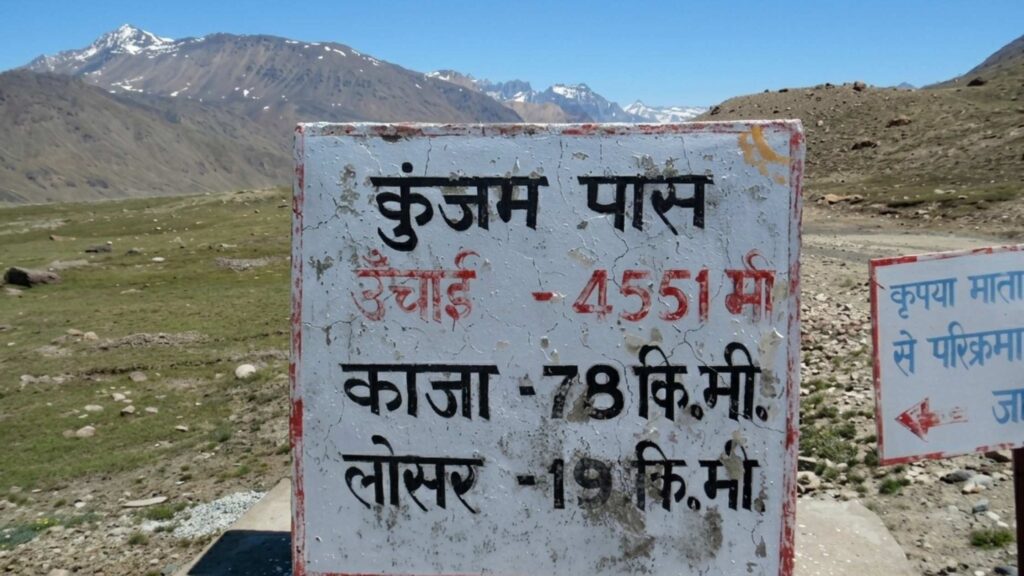
In most years, yes. Kunzum Pass is the gateway between Lahaul and Spiti valleys, and June is typically when BRO completes the heavy winter snow clearance on this 4,551-metre (14,931 feet) crossing.
But “typically” hides a lot of year-to-year variation. The official Lahaul-Spiti district guidance lists the Keylong-to-Kaza corridor — which includes Kunzum — as closed roughly from October or November through to June or July. That is a range, not a fixed date.
Some real examples help set expectations. In 2023, tourist and local movement via Kunzum was officially permitted from 1 June, with timed passage allowed between 8 AM and 2 PM and a mandatory exit by 5 PM. In 2025, the Manali-side reopening was announced on 30 May, but only for 4×4 vehicles — sedans and low-clearance cars were not cleared.
For 2026, BRO snow clearance operations were underway through spring. The exact opening depends on how much the final weeks of clearance progress and whether late-season snowfall disrupts the timeline.
The takeaway is simple: whether Kunzum Pass is open in June on your specific travel dates depends on that year’s conditions. Do not assume. Check the official Lahaul-Spiti district road-status page the day before you leave. Call your hotel in Kaza or Manali. Then check again on departure morning. In this region, yesterday’s road status is not today’s guarantee.
Early June vs Late June: The Difference Is Enormous
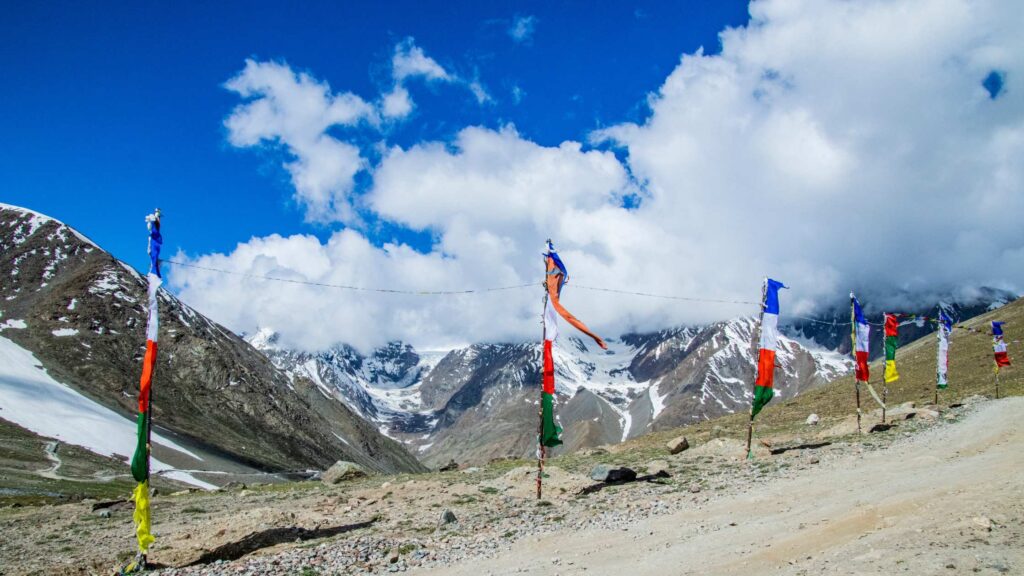
This is the single most important planning decision for a June Spiti trip. June is not one consistent month here — it is three very different weeks.
First Week of June (1–7 June)
This is the unpredictable window. The pass may be officially open, but the road surface is fresh from BRO clearance — soft patches, loose gravel, and snow walls lining both sides that melt and drip onto the road surface throughout the day.
Water crossings on the Manali side, particularly near the notorious Pagal Nala and the Batal stretch, run at their worst during this week. Midday snowmelt sends peak water flow across the road, and what looks like a shallow stream at 8 AM can be a knee-deep torrent by 2 PM.
Sedans should avoid this week entirely. Even vehicles like Innova or Scorpio need confident, experienced drivers. A 4×4 SUV with a local driver who knows the crossings is the ideal setup.
If your dates are locked to the first week and you absolutely must go, enter Spiti from the Shimla side. This way you reach Kunzum from the Kaza direction only if conditions allow — and if they do not, you still get a complete Spiti trip out of it.
Second Week of June (8–15 June)
Conditions noticeably improve. The worst of the fresh-clearance damage has been patched or settled by traffic. Water crossings calm down somewhat. The road starts feeling driveable rather than survivable.
Campsites near Chandratal begin coming online during this window, though not all operators are fully set up yet. You might find some tents pitched and some still being assembled.
This is also when the first serious wave of motorcycle riders arrives on the Manali-Kaza route. If you are planning a bike run, the second week of June is usually the earliest sensible start date.
Late June (16–30 June)
This is when Kunzum is at its most forgiving for the month. The road surface has seen two full weeks of traffic and repair work. Chandratal campsites are operational. The entire route feels settled and manageable.
Late June is what we recommend to families, first-time mountain travellers, and anyone who wants to enjoy the scenery rather than fight the road. Daytime temperatures are the warmest they get in Spiti summer, nights are cold but bearable with proper layers, and the crowds have not yet hit the July peak.
From our experience running trips every season, late June consistently delivers the best June experience. We encourage travellers to target the 20 June onwards window whenever their schedule allows.
Kunzum Pass Weather in June: What to Expect at 4,551 Metres

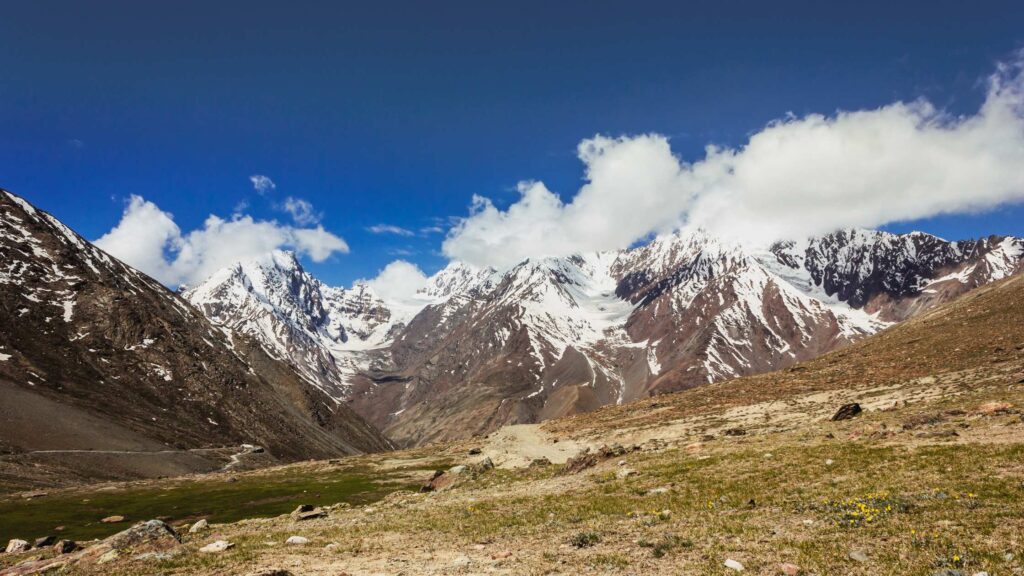
Kunzum Pass sits at 4,551 metres. At that altitude, “June” does not feel anything like June in the plains. Understanding Kunzum Pass weather in June is essential because the conditions can surprise even experienced mountain travellers.
Daytime temperatures range between 5°C and 15°C, depending on sun and cloud cover. When the sun is directly overhead and there is no wind, it can feel surprisingly pleasant — warm enough for just a fleece and a t-shirt. But the moment clouds roll in or you step into shade, the chill hits hard.
Night temperatures drop close to 0°C or below, especially in the first half of June. Wind chill at this altitude is brutal. A calm 2°C night feels manageable. A windy 2°C night feels like minus 8.
Nearby reference points help calibrate. Kaza, at 3,800 metres, typically sees daytime highs around 12°C with lows near 1°C in June. Higher altitude stations closer to the pass see highs around 9°C with lows touching minus 2°C.
What to pack: Thermal base layers, a heavy fleece or down jacket, a windproof and waterproof outer shell, warm gloves, a cap that covers ears, and thick socks. Sunscreen is essential too — UV radiation at this altitude is intense even on overcast days.
The most common packing mistake we see is travellers dressing for “Manali in June” and showing up at Kunzum shivering in a cotton hoodie. One packable down jacket weighs almost nothing in your bag and can save the entire trip.
Kunzum Pass Road Status in June 2026: Route-Wise Conditions
The two approaches to Kunzum are very different experiences, and understanding the Kunzum Pass road status in June 2026 from both sides is critical for planning your route.
The Kaza Side (Kaza → Losar → Kunzum)
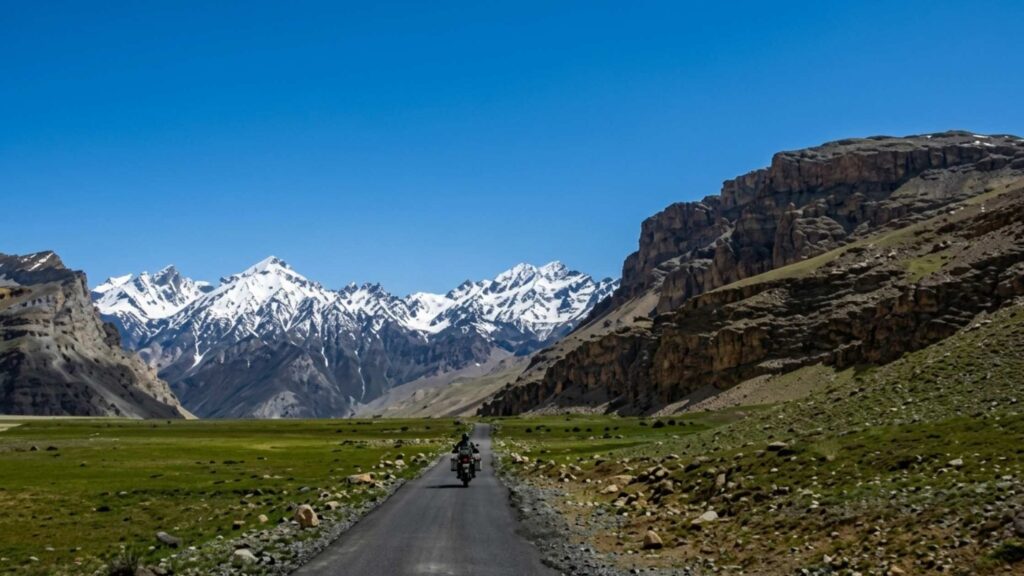
Coming from Kaza through Losar, the road is generally more stable in June. BRO clears this side first, working outward from the Kaza direction toward Kunzum top.
By mid-June, most of this stretch is paved with only scattered rough patches. The climb from Losar is steady, with 15 sharp hairpin turns leading up to the pass. No major water crossings on this side. A sturdy SUV handles it well even in early June, and by late June, a careful sedan driver can manage it — though an SUV remains the smarter choice.
Manali to Kunzum Pass Road Conditions in June
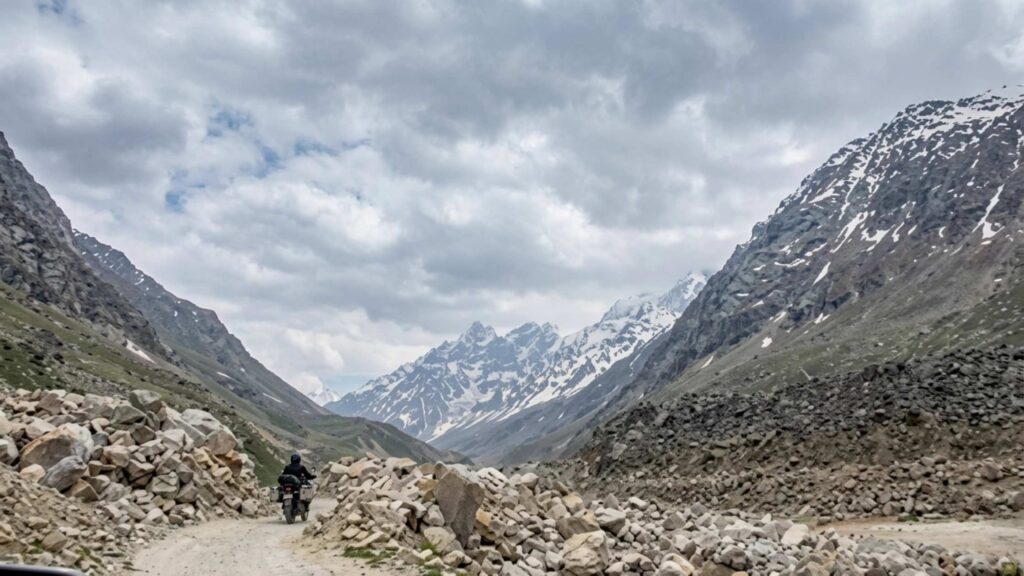
This is where June gets genuinely challenging. The Manali to Kunzum Pass road conditions in June are among the toughest you will encounter on any mainstream tourist route in India. After exiting the Atal Tunnel at Sissu, the road continues through Koksar and onto the stretch via Gramphu and Batal.
The Gramphu-to-Batal section is one of the roughest regularly used road stretches in the Indian Himalayas during early season. Broken tarmac gives way to loose gravel, boulder sections, and three to four water crossings that can get dangerously deep during midday snowmelt.
A sedan here in June is asking for trouble. We have seen cars scrape their underbodies near Pagal Nala, get stuck in soft mud patches, and flood their exhaust pipes at water crossings. Even SUVs with low ground clearance struggle.
What you want is a proper high-clearance SUV — Thar, Bolero, Scorpio, or similar — and you want to cross the Batal stretch before noon while water levels are at their lowest. By 3 PM, the streams swell with melt and what was manageable at 9 AM becomes risky.
Our drivers always aim to cross Pagal Nala and the Batal stretch before 11 AM in June. That one timing habit prevents more problems than any amount of expensive gear.
Which Route Should You Take in June: Shimla Side or Manali Side?
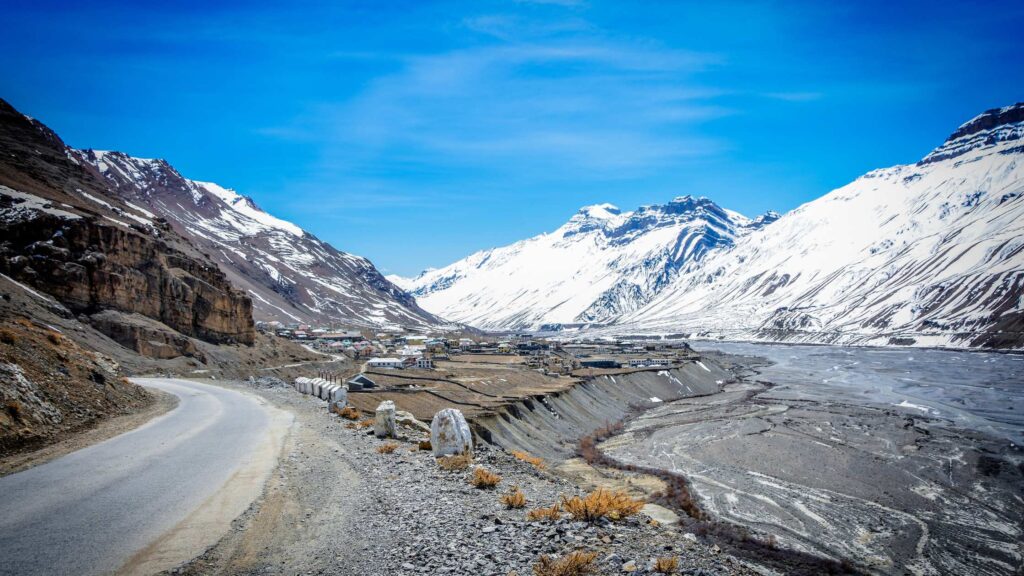
This is the first major planning decision, and if you are going in June — especially early June — the answer is more nuanced than most people expect.
Why the Shimla-Kinnaur Route Works Better in Early June
The Shimla → Narkanda → Rampur → Sangla/Kalpa → Nako → Tabo → Kaza route is a near-all-weather road. It does not depend on any high-altitude pass being cleared. You drive through progressively higher altitudes over three to four days, giving your body time to acclimatise naturally.
By the time you reach Kaza at 3,800 metres, you have spent several days adjusting. Your body is ready for the Kunzum climb. This matters far more than most travellers realise — altitude sickness does not care about your fitness level.
The Manali route, by contrast, pushes you from 2,050 metres (Manali) to 3,900+ metres within a single day via the Atal Tunnel. Add the Kunzum crossing the next day and you are at 4,551 metres with barely any acclimatisation buffer. That is how healthy, fit travellers end up with splitting headaches, nausea, and worse.
The Recommended June Loop
What we suggest to most June travellers is this: enter Spiti from the Shimla side, spend your days exploring Kaza and its surrounding villages, then exit via Kunzum and Manali in the second half of your trip.
By the time you cross Kunzum on the return leg, the pass has had additional days to settle, your body is fully acclimatised, and you get to experience the dramatic Manali-Kaza highway without the early-season anxiety.
When the Manali Route Makes Sense
If your dates fall in late June (after the 15th) and you are experienced with mountain roads, starting from Manali is perfectly viable. The route is shorter, faster, and lets you start from Delhi via Kiratpur and Manali without adding extra travel days.
Just do not default to the Manali side for early June unless you have done this road before and know what you are signing up for.
Chandratal via Kunzum Pass in June: Is the Lake Accessible?
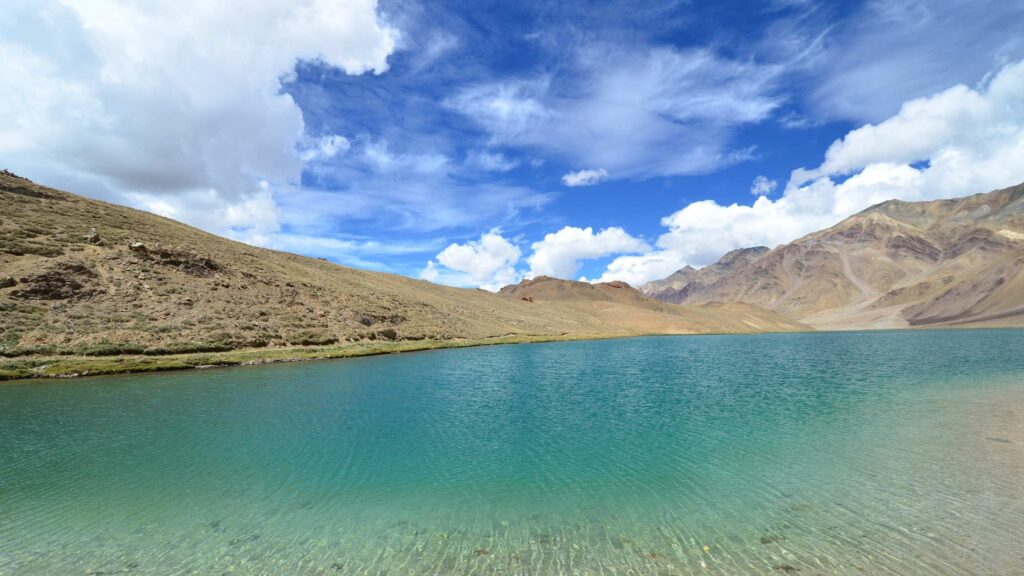
Yes — but with important caveats that can make or break your plans. Reaching Chandratal via Kunzum in June is possible, but the timing within the month matters enormously.
Chandratal Lake sits roughly 21 km from Kunzum Pass, reached via a narrow diversion road that branches off the main highway near Batal. The critical thing to understand is that Kunzum Pass opening and Chandratal access are connected but not identical.
When Kunzum opens, the main Manali-to-Kaza crossing becomes possible. But the 14 km side road to Chandratal is a separate clearance operation. It is narrower, rougher, and consistently one of the last stretches to become fully driveable each season.
Early June Chandratal Reality
In the first week of June, even if Kunzum is through, the Chandratal diversion may still have snow patches, broken shoulders, or standing water on the track. Campsites are almost never operational this early.
If you arrive on 3 June expecting to camp by the lake, you are likely to find an empty campsite area with no food, no services, and a lake that may still be partially frozen along the edges. A handful of adventurous travellers love this raw, deserted version. Most find it stressful and disappointing.
Mid-to-Late June
By 15 June onwards, most camps are set up and running. The diversion road has seen enough traffic to pack down into a driveable surface. The lake is fully thawed and at its early-season best — deep blue water ringed by snow-capped peaks.
This is the realistic window for a proper Chandratal experience in June. If the lake is a must-do on your trip, plan for mid-June or later.
We offer dedicated Chandratal tour packages that factor in buffer days and real-time road conditions, so you do not end up stranded at Batal with nowhere to stay.
Permits: What Do You Actually Need for Kunzum Pass and Chandratal?
This is where travellers get confused, because there are two separate permit conversations.
Entering Spiti Valley
Indian citizens do not need any permit to enter Spiti Valley. You can drive through Kunzum, stay in Kaza, visit every monastery and village — no paperwork required.
Foreign tourists entering through the Shimla-Kinnaur route need an Inner Line Permit (ILP) for protected sections between Jangi and Sumdo. This is issued at Rekong Peo or Kaza and is straightforward to obtain.
The e-Aagman Vehicle Permit (2024 Onwards)
Separately, the official e-Aagman portal requires a per-vehicle e-permit for the Atal Tunnel, Rohtang, Koksar, and Chandratal circuit. This applies to all vehicles — Indian and foreign — entering from the Manali side.
You apply online before travel. It is quick and either free or low-cost. Most travellers miss this because no one mentions it in Kaza, but checkposts on the Manali side enforce it when active.
Apply two to three days before departure, save the PDF on your phone, and carry a printout as backup for areas where mobile network drops out — which is most of the route.
Distances and Realistic Drive Times from Manali and Kaza
The numbers on Google Maps and the reality on this road are two very different things in June. Here are honest estimates.
Manali to Kunzum Pass: 122 km
Google Maps might say four hours. In June, realistically expect seven to nine hours of actual driving time. The Gramphu-to-Batal stretch alone can consume three hours if water crossings are running high.
Kaza to Kunzum Pass: 79 km
More predictable. Plan for three to four hours in June, depending on stops and road patches.
Kunzum Pass to Chandratal: 21 km
On paper, a 30-minute diversion. In reality, allow one and a half to two hours each way. The diversion road is slow by nature, and the final stretch to the lake involves a roughly 2 km walk from the parking area.
The Practical Takeaway
Do not plan back-to-back long drives in June. If you are crossing Kunzum from Manali, plan an overnight stop at Batal or push through to Kaza and rest there. Trying to do Manali to Kaza non-stop in early June means driving the final hours in failing light on a road with no guardrails and steep drops. That is not a risk worth taking.
Is Kunzum Pass Safe for Families, Older Travellers, and First-Timers in June?
The honest answer is yes — but not every week of June and not on every route.
Families with Children
Families with children above eight years old can do Kunzum comfortably in late June. The first week of June is too rough and too altitude-intensive for kids.
Choose the Shimla-side entry. Break the journey with stops in Kalpa or Nako to let children adjust gradually. Keep Chandratal as a day visit rather than an overnight camp — cold nights at 4,300 metres are genuinely hard on young bodies.
Older Travellers and First-Timers
The primary concern at Kunzum is altitude. At nearly 15,000 feet, Acute Mountain Sickness (AMS) is a real risk, especially if you have arrived from the plains quickly.
We have seen healthy, fit 30-year-olds hit hard by AMS because they drove Manali to Kaza in a single push. Physical fitness does not protect against altitude sickness. Only gradual acclimatisation does.
Our standing recommendation: spend at least one night in Manali (2,050 metres), then one night in Sissu or Keylong (around 3,000 metres), then cross Kunzum the following day. That stepwise climb makes a significant difference.
The Honest Warning
Kunzum is not Rohtang. There is no food stall at the top. No medical facility. No reliable mobile network. If someone falls ill at the pass, the only option is to descend — either back to Batal/Losar or onward to Kaza.
Do not treat Kunzum as a casual day trip from Manali if this is your first time above 12,000 feet. The consequences of poor planning at this altitude are far more serious than at lower mountain passes.
Browse Chandratal Tour Packages →
Food, Fuel, Network, and Stay Options Near Kunzum Pass
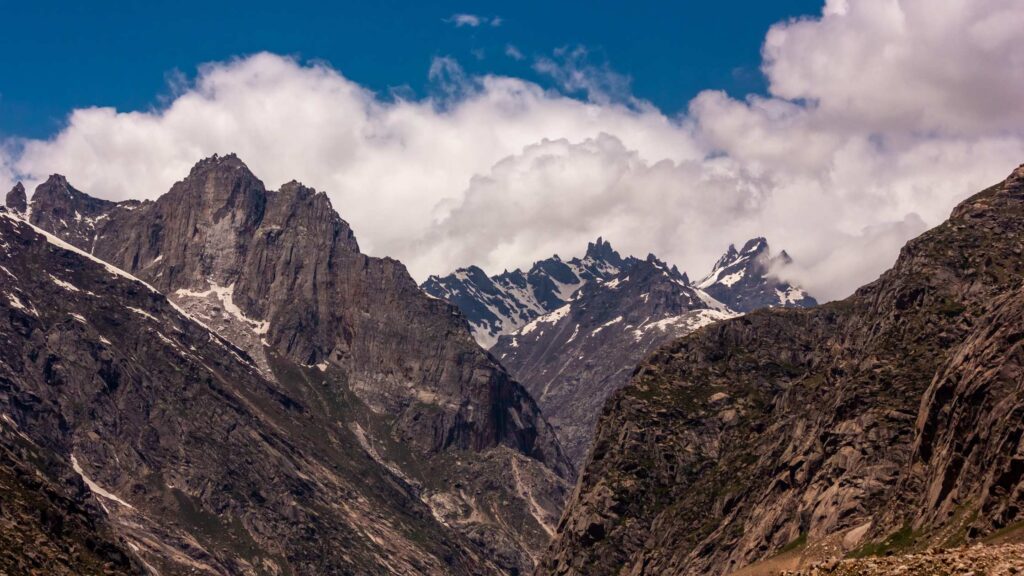
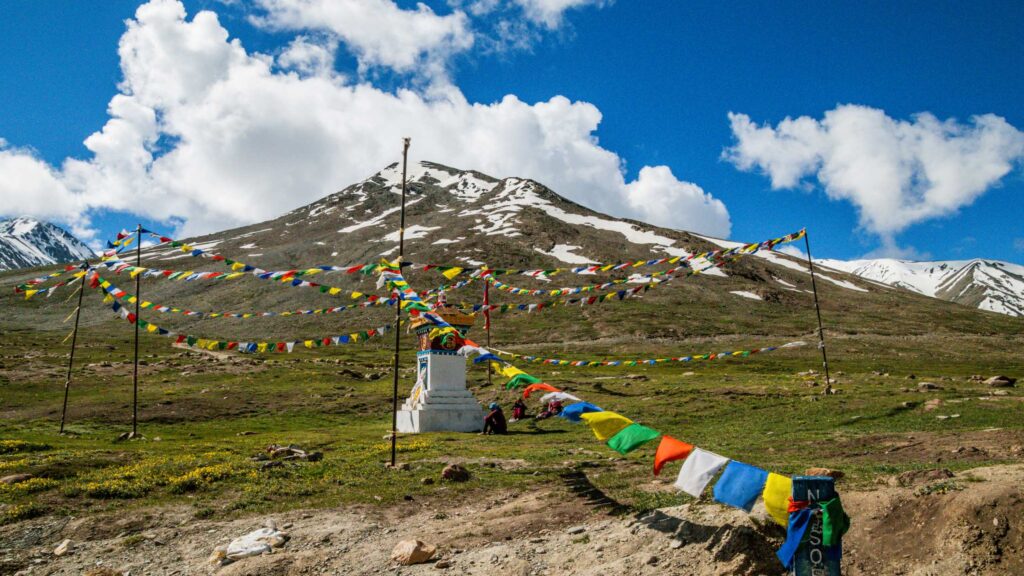
At the pass itself — almost nothing. The top has a small temple (Kunzum Devi Temple) and prayer flags. No dhaba, no chai stall, no washroom. You stop, take photos, pay your respects at the temple, and continue.
Where to Stock Up
Coming from Manali: Your last proper stops for food and fuel are Keylong and Sissu. Beyond Sissu, there are small dhabas at Koksar and a couple of very basic tea stalls at Batal. Batal’s small dhaba is where most travellers grab chai and Maggi before the final climb.
Coming from Kaza: Losar is your last proper stop. Small dhabas, homestays, a petrol pump, and basic supplies are available here.
Fuel Planning
Fill your tank in Manali or Kaza. There is no fuel in between — the petrol pumps in these two towns are your only anchors. Keylong has fuel too, but arriving there on an empty tank is risky because stations sometimes close early.
Mobile Network
Near zero at the pass. BSNL has patchy coverage at some spots on the Kaza side and near Losar. Jio and Airtel go completely blank well before you reach the top.
Download offline maps before you leave Manali. Inform your family of your route and expected return time. Accept that you will be off-grid for four to six hours during the crossing.
Accommodation
There is no hotel at Kunzum Pass. Your overnight options are Batal (very basic tent dhabas), Losar (proper homestays and small guesthouses), or further along in Kaza or Keylong.
Losar is the most comfortable mid-route halt in our experience. It splits the drive well and has decent home-cooked food. The rajma chawal at the Losar dhabas — cooked on a wood fire — is genuinely one of the best meals you will find on this entire stretch.
Sample June Itineraries for Kunzum Pass

Three practical route plans depending on your dates and travel style.
The Shimla Entry, Manali Exit Loop (8–9 Days) — Best for Most June Travellers
This is our top recommendation for families, first-timers, and anyone travelling in early-to-mid June.
Day 1: Delhi/Chandigarh to Shimla or Narkanda
Day 2: Drive to Sarahan or Kalpa (2,960 metres). Night halt for acclimatisation.
Day 3: Continue to Nako or Tabo. Night halt.
Day 4: Reach Kaza. Rest and explore the town.
Day 5–6: Explore Key Monastery, Kibber, Langza, Hikkim, Komic.
Day 7: Kaza to Losar. Cross Kunzum. Overnight at Chandratal camp (if the diversion road is open and camps are running). Or stay at Batal.
Day 8: Morning lake visit. Drive from Chandratal area to Manali via Batal and Atal Tunnel.
Day 9: Buffer day / Manali to Delhi.
This flow acclimatises you naturally and saves the Kunzum crossing for the second half of the trip when road conditions have settled further.
The Late June Manali Direct Plan (6–7 Days) — For Experienced Travellers
For late-June travellers who are short on time and comfortable with mountain roads.
Day 1: Delhi/Chandigarh to Manali. Rest.
Day 2: Manali to Sissu (3,100 metres) for an acclimatisation night.
Day 3: Sissu to Batal (overnight) or push through to Chandratal camp.
Day 4: Chandratal morning visit. Cross Kunzum to Kaza.
Day 5–6: Explore Kaza, Key, Kibber, Langza.
Day 7: Return to Manali via Kunzum and Atal Tunnel.
This works only if Kunzum and the Chandratal diversion are confirmed fully open and you have a proper SUV.
The Short Chandratal-Kunzum Plan (4–5 Days) — Higher Risk
For determined travellers targeting just Chandratal and Kunzum in a tight window.
Day 1: Manali to Sissu.
Day 2: Sissu to Chandratal camp. Cross early, arrive by afternoon. Walk to the lake before sunset.
Day 3: Sunrise at the lake. Drive across Kunzum to Losar or Kaza.
Day 4: Explore Kaza briefly. Return to Manali via Kunzum and Atal Tunnel.
Day 5: Buffer day or onward journey.
A realistic warning: this plan compresses everything and leaves zero breathing room. A single landslide, a rough road day, or any altitude issue and the entire schedule collapses. Only do this if you are experienced, flexible, and prepared to adapt on the fly.
The Final Verdict: Should You Plan Kunzum Pass in June 2026?
Here is the straight answer, broken down by week.
First Week of June
Go only if you are experienced with mountain roads, flexible with your plans, and have a proper 4×4. Avoid this week if it is your first Himalayan road trip. Chandratal camping is unreliable during this period. If you must travel now, enter from the Shimla side to give yourself a fallback.
Mid-June (8–15 June)
A reasonable choice. Most roads are workable by now, some Chandratal camps are up, and weather is stabilising. Keep at least one buffer day in your itinerary. A high-clearance SUV remains the smart vehicle choice.
Late June (16–30 June)
The sweet spot for June travel. Kunzum is steady, Chandratal camps are fully running, weather is the warmest Spiti summer offers, and crowds have not yet hit the July peak. This is the version of June we recommend to the majority of our travellers.
The thing most people get wrong about Kunzum in June is treating the entire month as one uniform window. It is not. 1 June and 25 June are two completely different trips. Plan the right week, bring the right vehicle, build in buffer days, and Kunzum becomes one of the most spectacular mountain drives in the country. Skip the planning, arrive on 3 June in a sedan with a rigid itinerary, and you will spend the trip fighting the road instead of enjoying it.
Plan Your Kunzum Pass Trip from Manali
At Manali Tour Planner, we run Spiti Valley tours every summer that are designed around real ground conditions — not last year’s blog posts. Whether you want a complete Shimla-to-Manali loop, a focused Chandratal overnight, or a full Spiti circuit, we build your itinerary based on what the roads actually look like when you travel.
Explore Our Spiti Valley Tour Packages →
Frequently Asked Questions
Is Kunzum Pass open in June every year?
Usually yes, but the exact opening date shifts every year depending on winter snowfall and BRO clearance speed. In some years it opens in late May, in others not until mid-June. Always verify with the official Lahaul-Spiti district road-status page before locking your dates.
Is the first week of June too early for Kunzum Pass?
For most travellers, yes. The road is freshly cleared, water crossings are at their worst, and Chandratal camps are typically not operational yet. Experienced travellers with 4×4 vehicles can manage it, but first-timers and families should wait until mid-June or later.
What is the weather at Kunzum Pass in June?
Daytime temperatures range from 5°C to 15°C. Nights drop close to 0°C or below. Sunny days feel pleasant with a fleece, but wind chill and altitude make it feel significantly colder than the thermometer suggests. Pack thermals, a down jacket, and a windproof outer layer.
Is there snow at Kunzum Pass in June?
Yes, particularly in the first half of the month. Snow walls line the road on both sides, patches remain on the pass top, and surrounding peaks stay snow-covered throughout June. Late June has less snow on the road surface itself.
Can a sedan reach Kunzum Pass in June?
Not recommended, especially in early June. The Gramphu-to-Batal stretch on the Manali side is far too rough for low-clearance vehicles. Late June might be possible on the Kaza side with a very careful driver, but a proper SUV is strongly preferred for the entire month.
How far is Kunzum Pass from Manali?
122 km via the Atal Tunnel, Gramphu, and Batal. In June, the drive realistically takes seven to nine hours. Do not trust Google Maps timing for this route — it dramatically underestimates actual conditions.
How far is Kunzum Pass from Kaza?
79 km via Losar. The drive typically takes three to four hours in June. This side is generally more stable and predictable than the Manali approach.
Do I need a permit for Kunzum Pass?
Indian citizens do not need any permit to cross Kunzum Pass or enter Spiti Valley. Foreign tourists entering through the Shimla-Kinnaur route need an Inner Line Permit (ILP) for certain protected sections.
Do I need the e-Aagman permit for this route?
Yes, if you are using the Atal Tunnel, Rohtang, Koksar, and Chandratal circuit from the Manali side. The e-Aagman portal issues a per-vehicle e-permit that is mandatory. Apply online before your travel date.
Is Chandratal open in June when Kunzum opens?
Not always simultaneously. Kunzum opening gives you the main highway crossing, but the Chandratal diversion road and camps can lag by one to two weeks. Mid-to-late June is the reliable window for a proper Chandratal experience with operational campsites.
Is there mobile network or food at Kunzum Pass?
No dependable network and no food at the pass itself. Stock up at Sissu, Keylong (Manali side) or Losar (Kaza side). BSNL has some patchy coverage at certain points, but do not rely on it.
Which route is better in June: Shimla side or Manali side?
The Shimla-to-Kaza route is near-all-weather and far better for acclimatisation. The Manali-to-Kaza route depends on Kunzum clearance and is rougher in early June. Most June travellers benefit from entering via Shimla and exiting via Manali once Kunzum has settled.
Is Kunzum Pass safe for families and children in June?
Late June is manageable for families with children above eight years old, provided you enter from the Shimla side for gradual acclimatisation. The first week of June is too rough and altitude-intensive for kids. Keep Chandratal as a day visit rather than an overnight camp.
Also Read: Kunzum Pass in May 2026: Is It Open? Road Status, Snow Conditions & Honest Travel Guide