
Baralacha Pass in September 2026 is usually a beautiful but unpredictable late-season trip. The Manali–Leh highway is generally accessible around this time, but the final road status always depends on fresh snowfall, weather changes, and BRO clearance updates closer to your travel date. Days can be clear and scenic, while mornings, evenings, and the pass area feel sharply cold because Baralacha La sits at around 16,000 feet on the Manali–Leh route. Light snowfall can happen anytime in late September, so travellers should start early, carry warm layers, avoid night driving, and confirm the latest road condition before crossing.
Quick Answer: Is Baralacha Pass open in September?
Yes, Baralacha Pass is generally open in September as long as the Manali-Leh highway remains operational. The road usually stays accessible through September since BRO keeps it maintained during the travel season. Early September is safer than late September because snowfall risk increases after the middle of the month.
Before you leave from Manali, Keylong or Jispa, always check the official Lahaul-Spiti road status page for the latest update on the Keylong to Leh stretch. If you want real-time ground reports before heading out, talk to our Manali team on WhatsApp and we’ll share the latest we’ve heard from local drivers and sources.
What is Baralacha Pass and why does September matter?
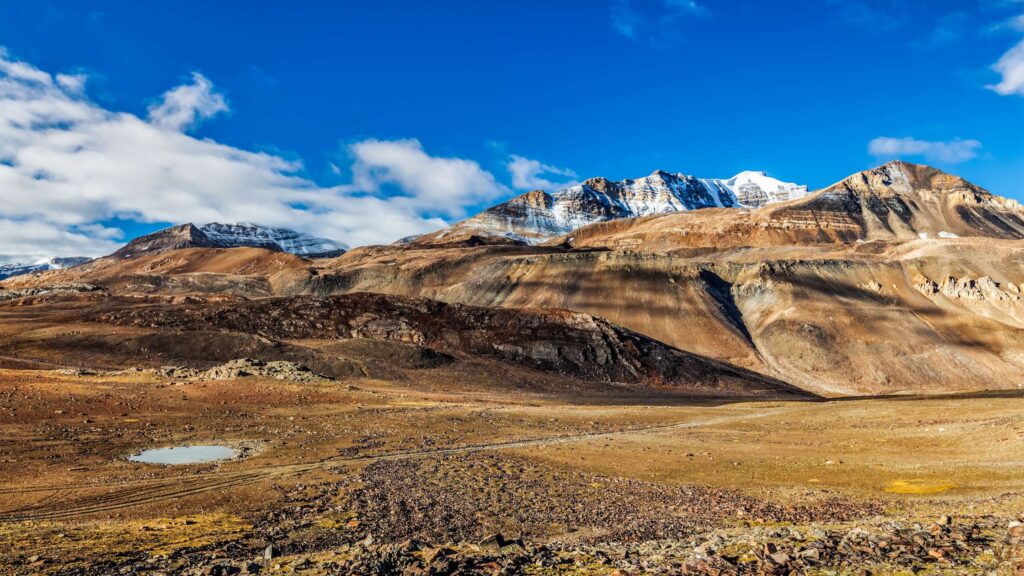
Baralacha La is a high mountain pass sitting at 16,040 ft (4,890 m) on the Manali-Leh highway. It connects the Lahaul side of Himachal Pradesh with the Ladakh side, and it’s one of the highest points you’ll cross on this legendary road.
Just below the pass sits Suraj Tal, a stunning high-altitude lake that is the source of the Bhaga River. On a clear day, the water is an unreal shade of blue, and the barren mountains around it make the whole scene feel like another planet.
So why September? Because the monsoon is retreating, the skies tend to be clearer, and the tourist rush of July and August has thinned out considerably. Mornings are cold, the light is golden, and there’s a quiet closing-season feel to the whole Manali-Leh corridor. You’ll share the road with fewer vehicles, and the landscape carries a raw, end-of-summer beauty that the peak months simply don’t have.
The broad travel window for the Manali-Leh highway and Baralacha La is June to September. By September, the road has been open for months, BRO maintenance crews have been at work, and most of the major disruptions from monsoon landslides have been dealt with. As of mid-May 2026, BRO had reopened the Manali-Leh highway after around five months of winter closure, and the Darcha-Sarchu stretch through Baralacha was reopened for light motor vehicles. By September, the road will have seen a full season of traffic and upkeep.
Is September a good time to visit Baralacha Pass?
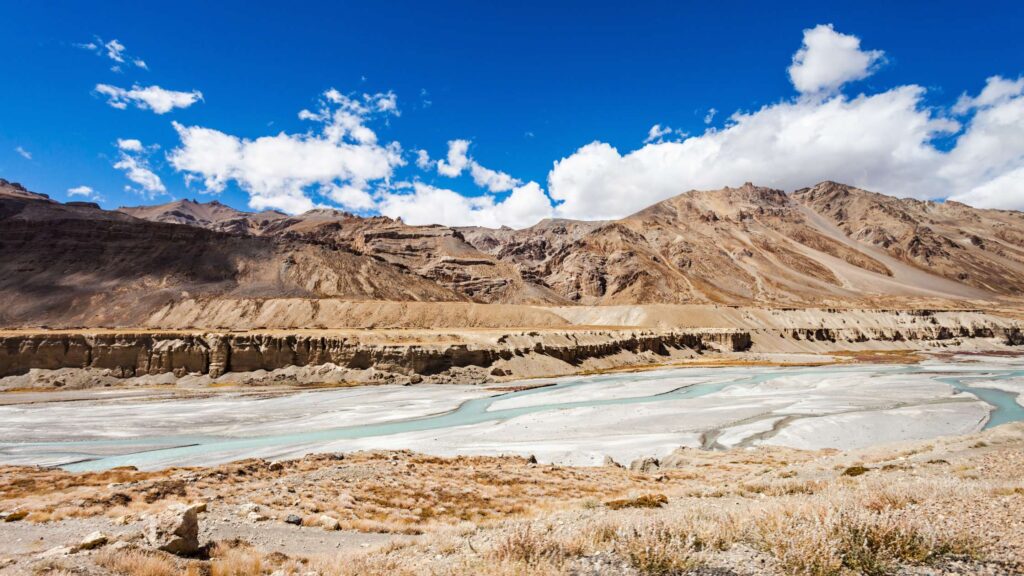
Early September is the safer bet. The monsoon is usually wrapping up by then, and the road through Darcha and Zingzing Bar to Baralacha tends to be in reasonable shape. Days are sunny, nights are cold, and the pass is almost always accessible. If you have flexibility in your dates, the first ten days of September are what we’d suggest.
Mid-September is still beautiful but noticeably colder. You’ll feel the shift in the air, especially above Zingzing Bar. The landscape starts looking more wintry on the peaks, and mornings can be biting. It’s very much doable, though. You just need proper layers and an early start from your base.
Late September is where the risk goes up. Snowfall can happen after mid-September, and by the last week of the month, there’s a real chance of the pass getting a dusting or worse. Road closures become more likely. If you’re planning a trip in the final week of September, keep buffer days and be mentally prepared to turn back if conditions don’t cooperate. The official Lahaul-Spiti road status page listed Keylong to Leh as Open as of mid-May 2026, but this changes frequently and must be checked again close to your travel dates.
What is the weather like at Baralacha Pass in September?
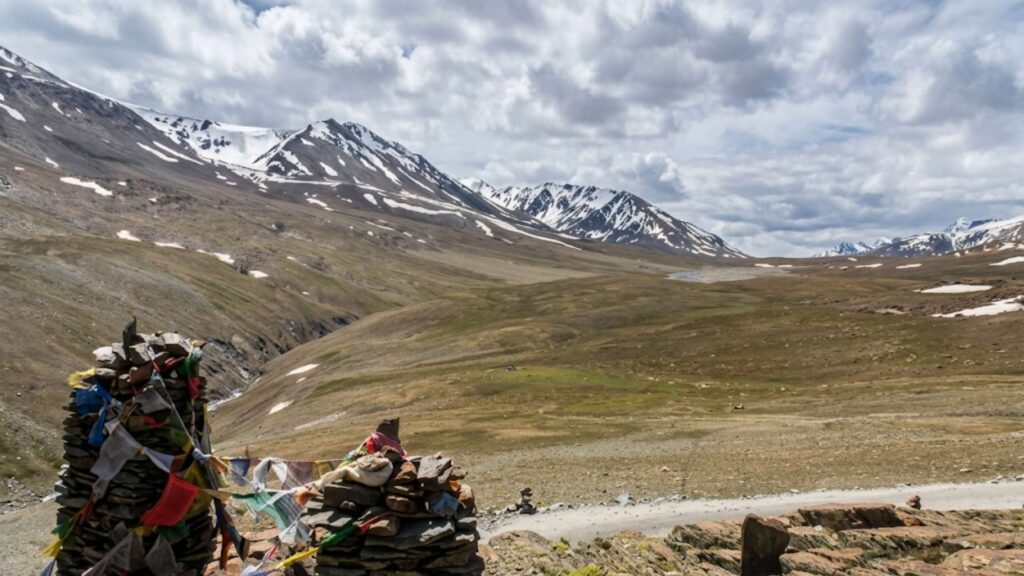
The weather at Baralacha La in September is a mix of sharp sun, cold wind, and sudden changes. You can start a morning under a perfectly blue sky and find yourself in fog and freezing wind by the time you reach the pass.
Mornings are properly cold. The sun is intense during the day because of the altitude, so you’ll burn quickly without sunscreen. Afternoons can bring clouds, wind and sometimes rain or sleet, especially as the month progresses.
Some travel sources mention autumn temperatures around 0°C to 15°C, but treat this as a rough range because mountain weather at this altitude changes daily, sometimes hourly. The only reliable move is to check the forecast close to your travel date and plan for the worst even if the forecast looks good.
Will there be snow at Baralacha Pass in September?
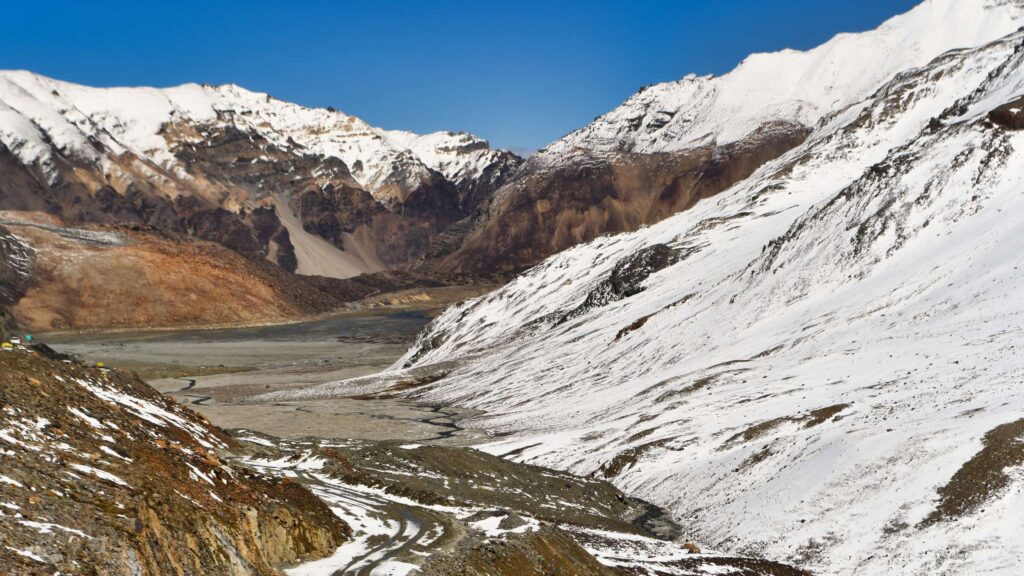
September is not a guaranteed snow month on the road surface at Baralacha. Most of the time, especially in early and mid-September, the road itself is clear and dry.
That said, you will almost certainly see old snow patches on surrounding slopes and peaks. These are leftovers from winter and the monsoon season. They make for great photos, and they’re a reminder that you’re well above 15,000 ft.
Fresh snowfall is possible, especially after mid-September. As the season turns, weather systems can push snow down to the pass level. One September-end traveller report described waking up to snowfall at Baralacha, with the road turning white overnight. But this is anecdotal, not a certainty. Some years, late September stays dry. Other years, winter arrives early. You can’t predict it weeks in advance.
What is the road condition from Manali to Baralacha Pass in September?
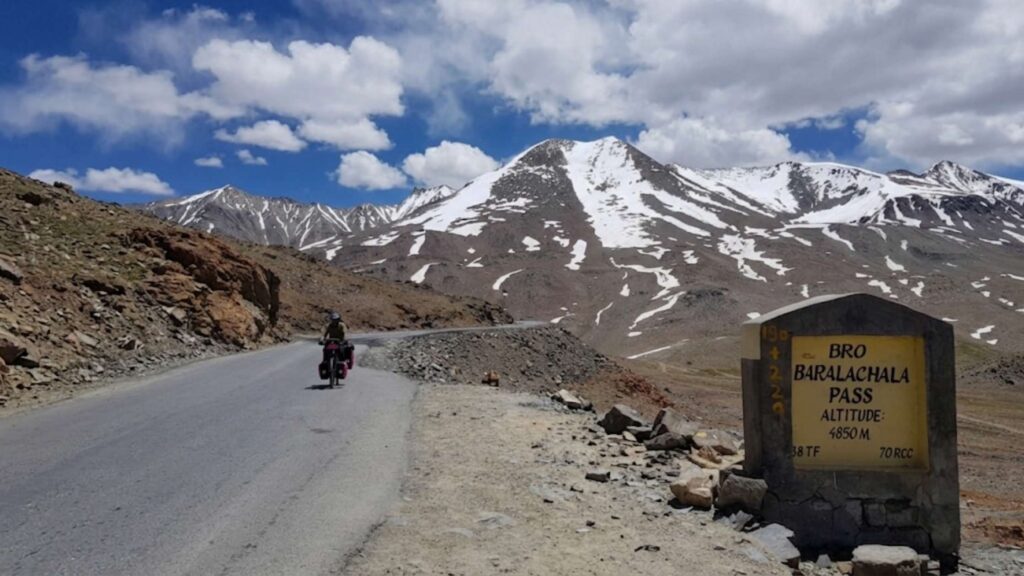
The route goes through Manali, Atal Tunnel, Sissu, Keylong, Jispa, Darcha, Zingzing Bar and then up to Baralacha Pass. The distance from Manali to Baralacha via Atal Tunnel is around 145 km.
The road is pretty decent until Jispa. Once you cross the Atal Tunnel, the stretch through Sissu and on to Keylong is well-maintained. Jispa is where things feel comfortable for the last time.
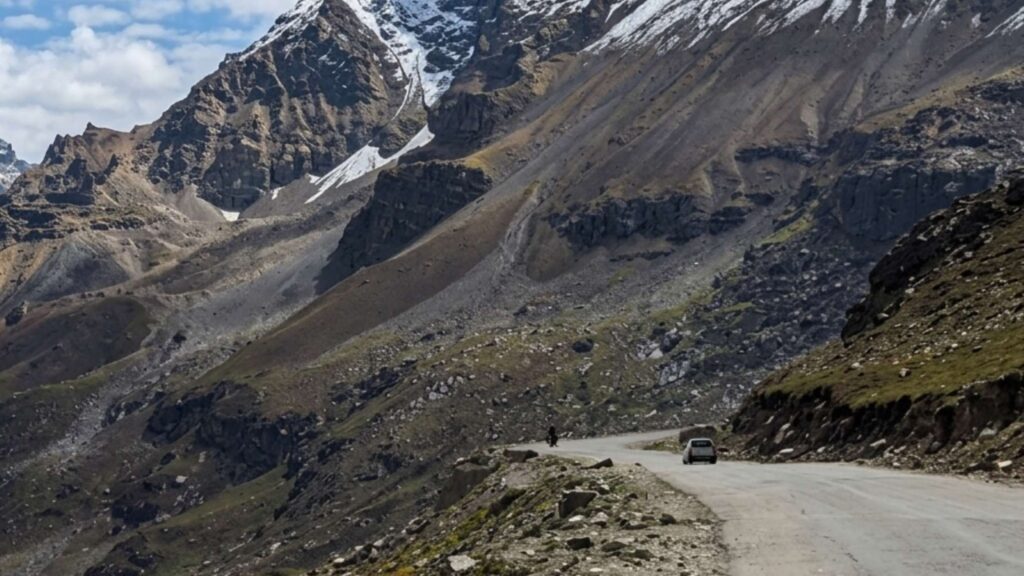
After Darcha, the road gets more serious. Expect gravel patches, broken tarmac, water crossings, potholes and stretches where the surface has been washed away. Sudden fog can roll in, and cold wind picks up as you gain altitude. The stretch between Darcha and Zingzing Bar is where the highway really tests your vehicle and your nerve. Zingzing Bar sits at around 14,270 ft and has a few tea stalls and dhabas that may or may not be open in September. Don’t count on them for a meal, but if they’re open, a hot chai here is one of the best things you’ll ever drink.
From Zingzing Bar, the road climbs steadily toward Baralacha. This final section can feel exposed and windy. Deepak Tal, a small lake at around 3,760 m, appears roughly 20 km from Jispa and makes for a nice brief stop before the bigger sights ahead.
In our experience, the smartest thing you can do is cross the water crossings before noon. Snowmelt from the peaks feeds these streams, and by afternoon the water level rises noticeably. What’s a manageable crossing at 8 AM can become a challenge by 2 PM.
Can you do Manali to Baralacha Pass as a day trip in September?
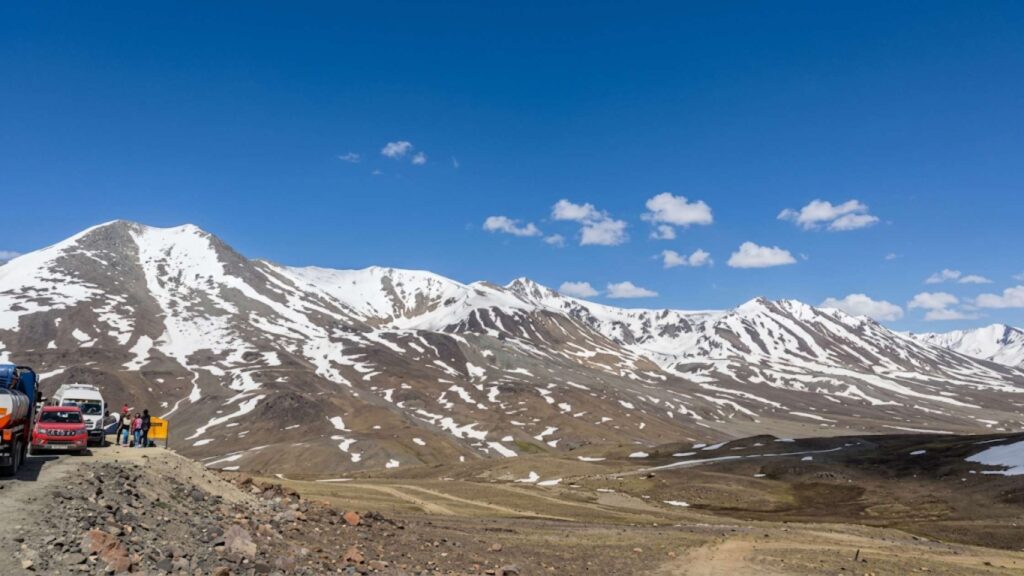
Technically, yes. But honestly, it’s long and tiring. Some sources suggest the one-way drive takes 6 to 7 hours without long breaks, and that’s assuming decent road conditions and no major holdups.
Add in photo stops, chai breaks, time at Suraj Tal and the pass itself, and you’re looking at a very full day. And then you’d have to drive all the way back.
For families, couples and first-time high-altitude travellers, our team recommends using Jispa or Keylong as a base instead. Stay a night there, leave early the next morning for Baralacha, spend a relaxed morning at the pass and Suraj Tal, and return to your base by afternoon.
Do not attempt a late evening return from Baralacha to Manali. The road after Darcha is not something you want to be on after dark, especially in September when nights come fast and temperatures drop sharply.
Best September itinerary for Baralacha Pass
Option 1: Relaxed 2-day trip from Manali
Day 1: Drive from Manali through the Atal Tunnel to Sissu, then continue to Keylong or Jispa. Settle in, have a warm dinner and rest early. This day is easy and scenic, and you’ll acclimatise a bit at Jispa’s altitude.
Day 2: Start early from Jispa, drive past Darcha and Zingzing Bar, stop at Deepak Tal for photos, continue to Suraj Tal and then up to Baralacha Pass. Spend some time at the top, then retrace your route back to Jispa or drive on to Keylong before heading back to Manali. This option lets you experience the pass without the pressure of continuing to Ladakh, and it’s perfect for travellers who want to see the best of the Manali-Leh highway without committing to the full crossing.
Option 2: Manali to Leh via Baralacha
Day 1: Drive from Manali through the Atal Tunnel to Jispa. Rest, eat, and sleep early.
Day 2: Leave Jispa early, cross Baralacha Pass, stop at Suraj Tal, and continue to Sarchu or beyond depending on your Ladakh plan. If you’re heading all the way to Leh, Sarchu is a common overnight stop but it sits at a higher altitude, so don’t sleep too high if you haven’t acclimatised yet.
If you’re combining this with Spiti, consider the Chandratal tour packages which cover a different but equally stunning part of Himachal.
Option 3: Safer late-September plan
If you’re travelling in the last week of September, add a buffer day to your itinerary. Weather can change fast and roads can close without warning at this time.
Do not keep non-refundable flights or trains immediately after your planned road crossing date. Give yourself at least one extra day. Check the road status at Manali, Keylong and Darcha before proceeding toward Baralacha. If locals and drivers say don’t go, listen to them.
Do you need a permit for Baralacha Pass in September?
Baralacha Pass itself does not have a separate entry ticket or fee. You don’t need to buy a pass or pay a toll specifically for the pass crossing.
However, vehicles entering Lahaul and Spiti may need e-Aagman registration. This is an online system that tracks vehicle entry into the region. Check the latest requirements before you travel.
The Rohtang permit applies only if you’re using the old Rohtang road from Manali. If you’re going through the Atal Tunnel, you generally do not need a Rohtang permit, but rules can change season to season, so verify before you leave.
Once you reach Leh, you’ll need Ladakh Inner Line Permits for restricted areas like Nubra Valley and Pangong Lake. These are arranged in Leh and are separate from anything on the Himachal side.
Is Baralacha Pass safe for bikes in September?
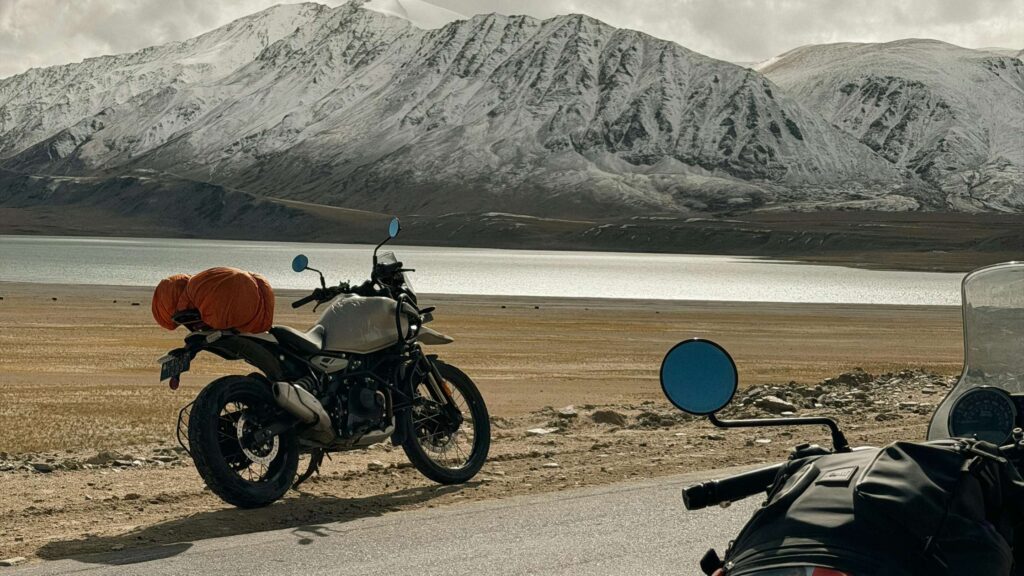
Early and mid-September can be great for experienced riders if the weather is clear. The road has its challenges, but thousands of bikers ride the Manali-Leh highway every season and September offers less traffic than July or August.
Late September is not ideal for casual riders. The cold is intense at altitude, visibility can drop fast, and if snowfall hits, you’ll be stuck on a gravel road at 16,000 ft with no help nearby.
If you’re riding, make sure you have waterproof gloves, a proper riding jacket, thermal layers underneath and good shoes that can handle walking through water crossings. Do not ride at night. Travel in a group or at least with one other rider.
And here’s a critical one: fill your fuel tank at Tandi. That’s the last petrol pump on this route. There is nothing beyond it until you reach much further into Ladakh. Running low on fuel after Darcha with no pump for over a hundred kilometres is a situation that catches unprepared riders every season. Top up at Tandi even if your tank is half full.
Can a sedan, hatchback or SUV go to Baralacha Pass in September?
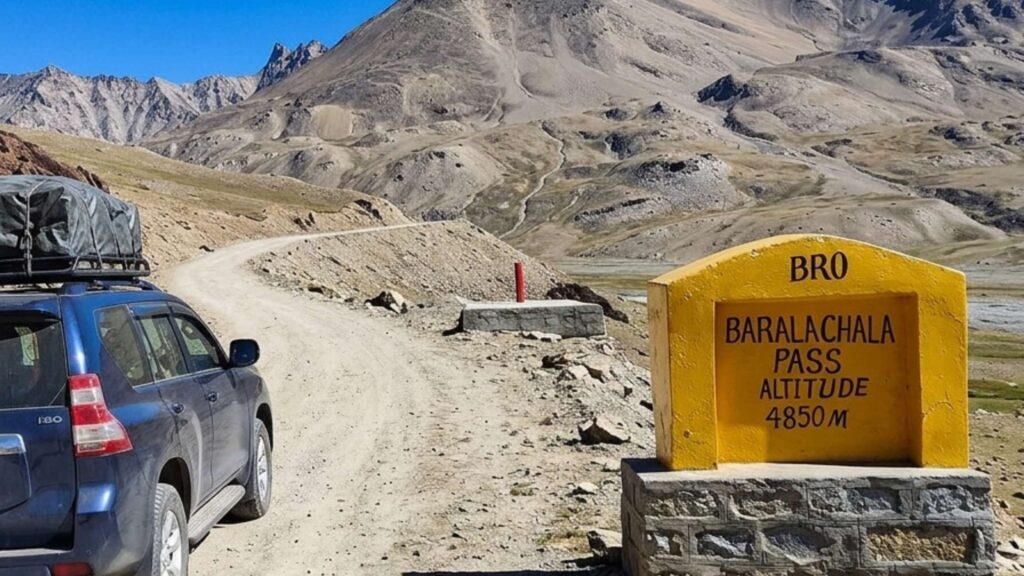
An SUV or any vehicle with higher ground clearance is always the safer choice for this route. The road after Darcha has water crossings, broken patches and gravel sections that can be tough on low-slung vehicles.
That said, sedans and hatchbacks do make the journey during the stable peak window if roads are dry and the driver is experienced. In our experience, we’ve seen Swifts and i20s on the Manali-Leh highway, but their owners were cautious drivers who knew when to slow down and when to stop.
We won’t promise that every small car can do it. If you’re driving a sedan, check conditions at Darcha before heading further. If locals say the water crossings are high, wait or turn back. A scraped underbody or a stalled engine in a water crossing at 14,000 ft is not a situation you want to be in with no mechanic for hours in either direction.
Where should you stay before or after Baralacha Pass?
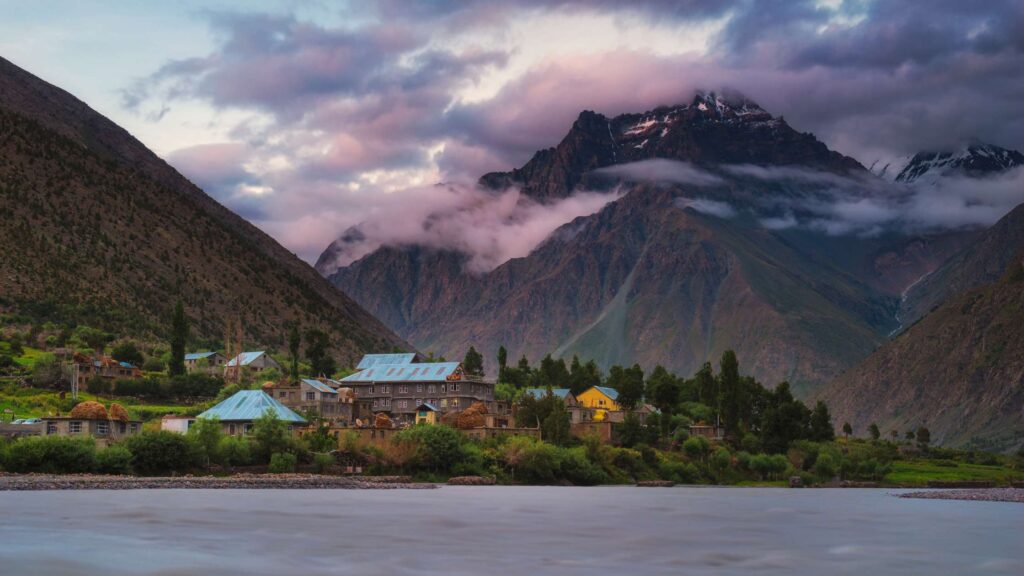
Jispa
It is the most commonly recommended base camp before crossing Baralacha. It sits at around 10,500 ft, which is high enough to acclimatise a bit but not so high that you’ll have trouble sleeping. There are guesthouses and camps here, and the Bhaga River valley setting is gorgeous.
Keylong
It is another solid option, especially if you want the last reliable mobile network, an ATM, and access to a hospital before entering the high remote stretch. According to travel sources, Keylong is the last major place for these essentials.
Sarchu
It is higher and sits on the Ladakh side of Baralacha. It’s a common overnight stop on the Manali-Leh highway, but the altitude can cause headaches and discomfort for first-time travellers. If you haven’t crossed a high pass before, sleeping at Sarchu on your first night might not be comfortable. Many travellers report disturbed sleep and mild nausea at Sarchu. If you can push through to a lower point or go back to Jispa, your body will thank you.
What should you pack for Baralacha Pass in September?
September at 16,000 ft is no joke, and you need to pack like you mean it. A proper warm jacket is non-negotiable, and layer it over a fleece or thermal. Carry gloves and a cap because the wind at the pass will cut right through you. Sunglasses and sunscreen are essential too because the UV at this altitude is brutal, even when it feels cold.
On the practical side, bring plenty of water and snacks because there’s very little available after Darcha. A few dhabas at Zingzing Bar might be open, but don’t rely on them. Carry basic medicines for headache, nausea and cold, a power bank since your phone battery will drain fast in the cold, and offline maps because mobile signal disappears well before Baralacha.
Keep cash on you. Cards won’t work up there. If you’re driving, carry a vehicle toolkit and spare tyre. For elderly travellers, children or anyone with respiratory issues, a police advisory has warned about low oxygen beyond Darcha and advised travellers to carry oxygen, first-aid supplies and stay hydrated throughout the crossing.
What can go wrong in September and how should you plan?
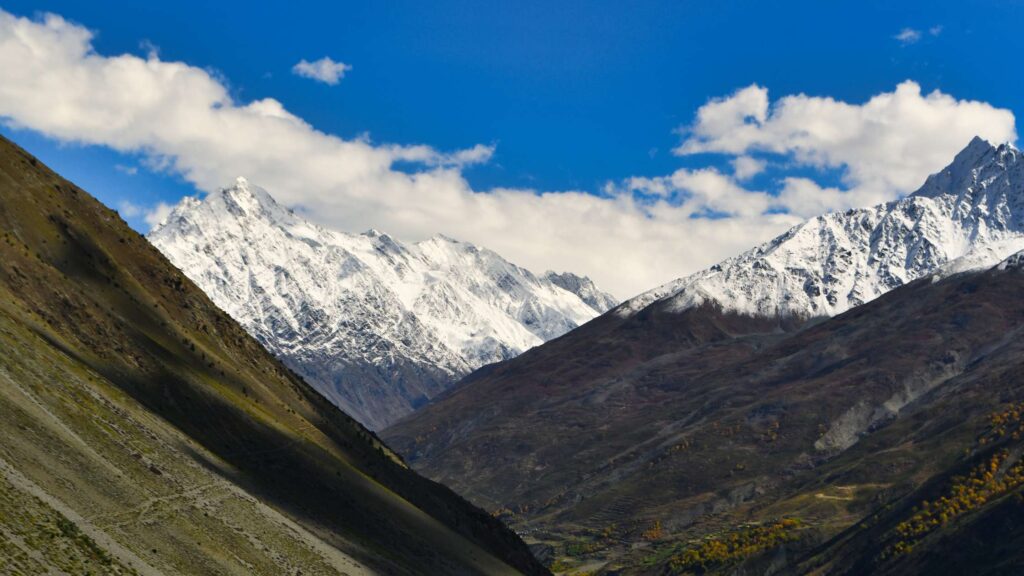
Fresh snowfall can make the road slippery or block it entirely. Black ice on the road surface in early mornings is a real danger, especially on the shaded curves near Zingzing Bar and the final climb to the pass.
Road closure can happen without warning. When it does, there’s no detour. You wait, or you go back. Mobile signal is absent around Baralacha and mostly gone after Darcha, so you can’t call for help easily. Food options disappear after Darcha too, so if you’re stuck, you’ll need whatever you packed.
Rescue takes time in this area. There’s no breakdown service waiting nearby. If a vehicle has trouble at the pass, help might take hours to arrive from Keylong or Jispa. Low oxygen is a genuine concern too. The police advisory about carrying oxygen and first-aid supplies exists for a reason. Altitude sickness can hit anyone, even fit young travellers, and it hits harder when you’re cold, dehydrated or stressed from a difficult drive.
Our team recommends a simple rule: if weather worsens while you’re on the road, turn back to Jispa or Keylong immediately. Don’t push through hoping it’ll clear up. The pass will be there next time. If you want current ground reports before finalising your September dates, talk to our Manali team on WhatsApp and we’ll help you plan realistically.
Baralacha Pass vs Rohtang vs Kunzum in September
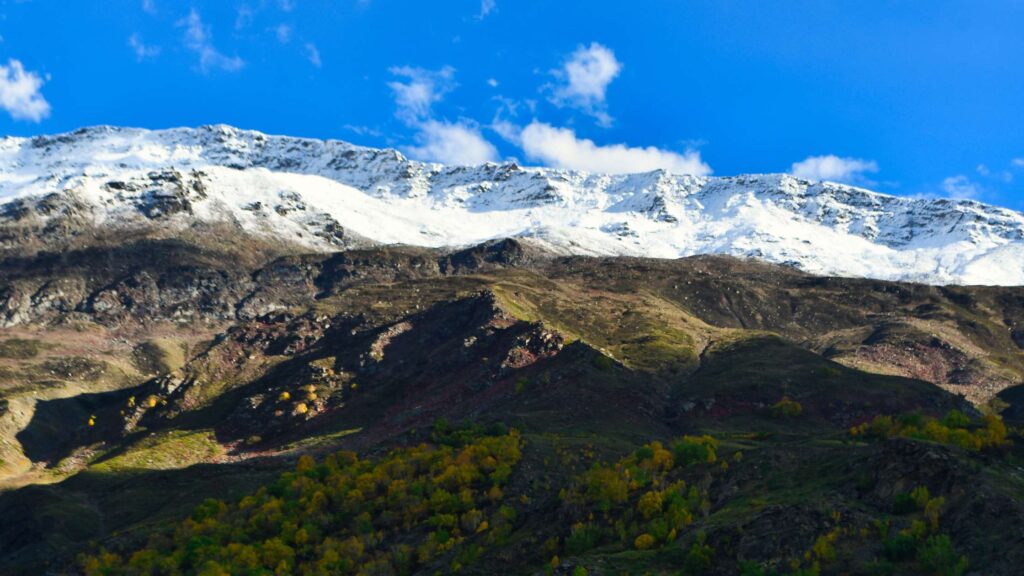
Baralacha Pass
Is higher, colder and far more remote than both Rohtang and Kunzum. It’s a proper high-altitude crossing with limited infrastructure, no mobile signal and serious weather. This is not a casual tourist stop.
Rohtang Pass
Is much more accessible and commercial. It’s closer to Manali, has regulated tourist traffic, and even in September you’ll find crowds and snowpoint activity. It’s a completely different experience from Baralacha.
Kunzum Pass
Is more relevant for travellers heading to Spiti Valley and Chandratal. If your plan is the Spiti circuit, Kunzum is your crossing, not Baralacha. Check Spiti Valley tour packages if that’s the route you’re considering.
In short, if you want a dramatic, remote, high-altitude experience on the Manali-Leh highway, Baralacha is the one. If you want an easier pass experience closer to Manali, Rohtang is fine. If Spiti is your goal, Kunzum is your pass. All three are open in September in most years, but the level of preparation, vehicle requirements and physical demands are very different. Baralacha requires the most planning of the three.
Manali Tour Planner local tips for Baralacha Pass in September
In our experience, the single most important thing is to start early from Jispa. We’re talking 5:30 to 6 AM early. The morning hours are calmer, the water crossings are lower, and you get the best light for photos at Suraj Tal.
Don’t stay too long at the pass itself. At 16,040 ft, every extra hour increases the chance of altitude discomfort. Take your photos, soak in the view, and start heading down.
Drink water constantly, even when you don’t feel thirsty. Dehydration creeps up fast at altitude. Avoid alcohol the night before your crossing because it makes altitude sickness worse.
Our team recommends carrying cash not just for emergencies but because the few dhabas and camps that operate up here only accept cash. There are no UPI machines at Zingzing Bar.
And one thing that catches a lot of travellers off guard: do not trust Google Maps travel time blindly on this route. Maps might show 4 hours for a stretch that takes 6 or 7 hours in reality because of road conditions, water crossings and altitude. Plan based on actual driver reports, not app estimates.
Frequently Asked Questions
Is Baralacha Pass open in September?
Yes, Baralacha Pass is generally open throughout September as part of the Manali-Leh highway’s operational season. Early September is the most reliable window. Late September can see closures due to early snowfall. Always check the official Lahaul-Spiti road status before travelling.
Is September a good time to visit Baralacha La?
September is a lovely time to visit if you like fewer crowds, clearer skies and a quieter highway. Early September is the safer bet. The landscape has a golden, end-of-season beauty that the peak summer months don’t offer.
Does Baralacha Pass get snow in September?
Fresh snow on the road surface is unlikely in early September but possible after mid-September. You’ll see old snow patches on surrounding mountains throughout the month. Be prepared for snowfall if you’re travelling in the last two weeks.
Is Baralacha Pass safe for bikes in September?
For experienced riders with proper gear, early and mid-September can be great. Late September adds cold, visibility and road risks that make it unsuitable for casual riders. Always ride in a group and never ride after dark.
What is the temperature at Baralacha Pass in September?
Some travel sources suggest a range of 0°C to 15°C, but mountain weather at this altitude is highly unpredictable. Expect cold mornings, warm midday sun and biting wind at the pass. Check forecasts close to your travel date.
Can I go from Manali to Baralacha Pass in one day?
It’s physically possible but very tiring. The drive takes roughly 6 to 7 hours one way without long breaks. We recommend staying at Jispa or Keylong the night before and doing the pass as a morning trip the next day.
How far is Baralacha Pass from Manali?
Via the Atal Tunnel, Baralacha Pass is around 145 km from Manali. The traditional route over Rohtang is longer at roughly 190 km.
Do I need a permit for Baralacha Pass?
The pass itself does not require a separate permit or ticket. Vehicles may need e-Aagman registration for Lahaul-Spiti entry. Rohtang permits are only needed if you take the old Rohtang road. Atal Tunnel travellers generally don’t need one.
Which is better for Baralacha Pass, June or September?
June is earlier in the season with longer days and possibly some road clearance work still underway. September offers clearer skies, fewer tourists and colder weather. Both months work. June is better if you want warmer days. September is better if you prefer solitude and autumn light.
Can a sedan go to Baralacha Pass in September?
Sedans can make the journey when roads are dry and conditions are stable, but an SUV or high-ground-clearance vehicle is always the safer option. The stretch after Darcha has water crossings and broken patches that are tough on low cars.
Where should I stay before crossing Baralacha Pass?
Jispa and Keylong are the best options. Jispa is closer to Baralacha and sits at a comfortable altitude for acclimatisation. Keylong offers the last ATM, hospital and reliable mobile network.
Is Suraj Tal accessible in September?
Yes, Suraj Tal is accessible throughout September as long as the road to Baralacha is open. It sits just below the pass and is one of the most beautiful sights on the entire Manali-Leh highway. The lake is the source of the Bhaga River and absolutely worth a stop.
Also Read: Baralacha Pass in August 2026: Weather, Road Status, Snow and Travel Tips